|
|
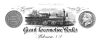
Grant Locomotive Works
Zum Vergrößern Bild anklicken
| Name | Grant Locomotive Works |
| Ortssitz | Paterson (N.J.) |
| Art des Unternehmens | Lokomotivfabrik |
| Anmerkungen | Bis ca. 1863: "New Jersey Locomotive & Machine Works" (s.d.). 1874: David B. Grant, Präsident. Sollen um 1888 von Paterson nach Chicago verlegt werden. Die Chicagoer Nachfolge-Firma wurde im März 1890 eingetragen. |
| Quellenangaben | [Wiley: American iron trade manual (1874) 63] [New York Times, 01.11.1888] [Nelson: History of Paterson and its environs 1 (1920) 355] [Trumbull: History of industrial Paterson (1882) 128] |
| Hinweise | [Manual of the Railroads of the United States (1873/74)] Anzeige |
| Zeit |
Ereignis |
| 1863 |
Oliver DeForest Grant erwirbt die "New Jersey Locomotive and Machine Works" und macht seine Söhne David B. und Suydam zu Teilhabern |
| 1866 |
William W. Evans wird Chefbuchhalter |
| 21.03.1866 |
Umbenennung aus "New Jersey Locomotive and Machine Works". - Bau von mehr moderenen Werkstätten an der Pine und Jersey Street |
| 1867 |
Auszeichnung durch eine Goldmedaille in Paris für die Lokomotive "America", später "Chicago, Rock Island & Pacific Railroad" No. 109 |
| 1875 |
Die Firma hat etwa $800.000 Schulden und wird durch die Kreditgeber umorganisiert. Die Geschäftstätigkeit wird fortgeetzt. |
| 1880 |
Eugene Fontaine baut eine Lokomotive, bei welcher auf beiden Maschinenseiten jeweils der schrägliegende Zylinder auf die Kurbel eines oberen Treibrades (Achse über dem Kesselscheitel) und von dort durch Reibung auf ein darunter befinliches, direkt außerhalb des Treibrades wirkt (Achsfolge 2'A1). Patent vmtl. vom 27.07.1880. Mit finanzieller Hilfe anderer wird dieser Plan bei den "Grant Locomotive Works", Paterson, New Jersey, unter seiner persönlichen Leitung durchgeführt. Sie zieht das Interesse von Eisenbahnunternehmern auf sich, während die Presse die Öffentlichkeit auf die ungewöhnlichen Maschine aufmerksam macht. Die Hauptschwierigkeit besteht darin, daß die Kraft durch eine einzige Stange an jeder Seite vom Zylinder zu einem großen Treibrad unmittelbar über dem vorderen Treibrad einer normalen Lokomotive übertragen wird. Die Fahrt zwischen Amherstburg und St. Thomas, Kanada (111 miles) wird in der unvergleichlichen Zeit von 98 Minuten zurückgelegt. |
| 01.01.1880 |
David Grant scheidet aus seiner Lokomotivfabrik aus. Sein Nachfolger wird William W. Evans |
| 1883 |
Die Verlegung des "Grant Locomotive Works", die inzwischen rund 1.800 Lokomotiven geliefert hatten, nach Chicago (Vorort Cicero) beginnt |
| 1887 |
Die Hälfte der Gebäude in Paterson wird durch Feuer zerstört |
| 03.01.1890 |
Einstellung des Geschäftsbetriebs. - Im Januar (oder März ?) 1893 wird in Chicago (Cicero) eine gleichnamige Gesellschaft (auch genannt "Grant Locomotive Works of Chicago") gegründet, welche die Ausstattung des bisherigen Werks nutzt. |
| 1893 |
Nach dem Umzug nach Chicago bauen die "Grant Locomotive Works" nur noch 24 Lokomotiven. Die Panik 1893 zwingt sie in Konkursverwaltung |
| Produkt |
ab |
Bem. |
bis |
Bem. |
Kommentar |
| Lokomotiven |
1868 |
Beginn ca. |
1890 |
Ende: Verlegung nach Chicago |
Baute um 1881 Fontaine-Lokomotiven (schräge Zylinder, Kurbelwelle über dem Kessel, Achsfolge 2'A1') |
| von |
bis |
Produkt |
im Jahr |
am Tag |
Einheit |
Kommentar |
| 1854 |
1854 |
Lokomotiven |
35 |
|
|
|
| 1855 |
1855 |
Lokomotiven |
40 |
|
|
|
| 1856 |
1856 |
Lokomotiven |
42 |
|
|
|
| 1857 |
1857 |
Lokomotiven |
33 |
|
|
|
| 1858 |
1858 |
Lokomotiven |
16 |
|
|
|
| 1859 |
1859 |
Lokomotiven |
20 |
|
|
|
| 1860 |
1860 |
Lokomotiven |
24 |
|
|
|
| 1861 |
1861 |
Lokomotiven |
31 |
|
|
|
| 1862 |
1862 |
Lokomotiven |
40 |
|
|
|
| 1863 |
1863 |
Lokomotiven |
45 |
|
|
|
| 1864 |
1864 |
Lokomotiven |
50 |
|
|
|
| 1865 |
1865 |
Lokomotiven |
53 |
|
|
|
| 1866 |
1866 |
Lokomotiven |
58 |
|
|
|
| 1867 |
1867 |
Lokomotiven |
48 |
|
|
|
| 1868 |
1868 |
Lokomotiven |
57 |
|
|
|
| 1869 |
1869 |
Lokomotiven |
100 |
|
|
|
| 1870 |
1870 |
Lokomotiven |
101 |
|
|
|
| 1871 |
1871 |
Lokomotiven |
96 |
|
|
|
| 1872 |
1872 |
Lokomotiven |
111 |
|
|
|
| 1873 |
1873 |
Lokomotiven |
131 |
|
|
|
| 1874 |
1874 |
Lokomotiven |
60 |
|
|
|
| 1875 |
1875 |
Lokomotiven |
10 |
|
|
|
| 1876 |
1876 |
Lokomotiven |
12 |
|
|
|
| 1877 |
1877 |
Lokomotiven |
25 |
|
|
|
| 1878 |
1878 |
Lokomotiven |
46 |
|
|
|
| 1879 |
1879 |
Lokomotiven |
31 |
|
|
|
| 1880 |
1880 |
Lokomotiven |
57 |
|
|
|
| 1881 |
1881 |
Lokomotiven |
111 |
|
|
|
Zeit = 1: Zeitpunkt unbekannt
| ZEIT | 1882 |
| THEMA | Beschreibung |
| TEXT | In that portion of this work devoted to machinery it has been shown that in 1843 Samuel Smith, his brother William Smith, Judge Whitely and Thomas Beggs started a machine shop in the Franklin Mill; also that a short time afterward James Jackson and Patrick Maginnis bought the interest of Judge Whitely and William Smith and became partners, the firm name being "Beggs & Smith", until 1844-45, when, Thomas Beggs dying, William Swinburne, City Comptroller of Paterson, whose distinguished career has been followed during his connection with the "Rogers Locomotive Works", as Superintendent, became one of the company, the name of which was changed to "Swinburne, Smith & Company". Samuel Smith, who is a prominent figure in the history of several early enterprises, and who is still actively engaged in the iron business, had been a moulder at the Rogers Works; James Jackson and Patrick Maginnis, both very active and prominent citizens of that day, were the "Company", and were more especially noted as cotton manufacturers. The location of the works was just off Mill street, between John - now Ellison - and Van Houten streets, fronting the race; the size
of the building 60x40 feet, two stories, of brick. For one or two years after the organization of the firm of "Swinburne, Smith & Co.", however, they occupied the lower story of the "Jackson & Maginnis" factory. This old building, afterward burned, was immediately adjoining the new building erected to accommodate an extension of the business. A general machine business was done by the firm until 1848, when, on the opening of the Eastern Division of the Erie Railway to Owego, they gave up jobbing and machine-building and began to build locomotives. This locomotive works is consequently the second in order of establishment in Paterson, "Danforth, Cooke & Co." not beginning to build locomotives until 1852. There were about 150 men employed during the first year of their locomotive-building by "Swinburne, Smith & Co.", and five or six engines were completed. The first engine built at the works was for the Erie Railway Co. and was finished in May, 1848. In 1849 the firm removed their plant to what is now the main building of the Grant Locomotive Works, which was very much the same in appearance then as now, only that it bears the marks and stains of about thirty years' use and action of the elements. The size of the building was 60x150 feet, three stories. The after extensions have been made toward the West. Here from 250 to 300 men were employed, and the firm conducted the locomotive industry with great energy, despite the fact that "Swinburne, Smith & Co." endorsed heavily, to the extent of $20.000 or more, for their two partners, Jackson and Maginnis, as manufacturers of prints, which brought the firm into great embarassment. However, they weathered the difficulty and still prosecuted the business with vigor, turning out many locomotives, receiving three orders from the "New York and Erie Company" for ten engines each in close succession, also from other roads, until, in 1851-52, a charter having been obtained, the concern was incorporated
under the name of the "New Jersey Locomotive and Machine Company". Mr. Swinburne was opposed to this change and marked his disapprobation by a withdrawal from the new company about six months later, and almost immediately he started a works of his own. H. Uhry, a skillful and experienced mechanical draughtsman ami a very accomplished gentleman, a native of France, succeeded Mr. Swinburne in the direction of the locomotive-building at the company's works. Mr. Uhry was an inventor and became widely known through his valuable improvements to the cut-off, applied with success to stationary engines; also in connection with other improvements. Messrs. Smith, President, and Jackson, Vice-President, controlled the stock of the company, Mr. Maginnis being the weaker of the original firm. The old incubus connected with the operation of the cotton factory still rested on the partners, and Mr. Jackson held a bare control in the company. There was much litigation and great embarrassment, Mr. Swinburne, the retiring partner, losing several thousand dollars through being involved, as endorser, with the firm of "Jackson & Maginnis". Much of the stock found its way into the market during the few years that elapsed after the incorporation, and finally Oliver D. F. Grant and his son, D. B. Grant, then bankers and brokers in New York, secured a preponderance, a new charter was obtained and Mr. Grant, the elder, was elected President of what was then and has since been st}ded the Grant Locomotive Works. Mr. Jackson went out of the company with but little, Mr. Smith sold out and Mr. Maginnis also went out, as represented, with much less than any of the others. Mr. Grant, the new head of the establishment, was a bright, energetic and talented man of business, ami under his direction the after operation of the concern was remarkably successful. It was at this works a few years later that the famous locomotive "America," exhibited at the Paris Exposition in 1867, was built, and the proprietors were awarded not only medals but great honor for the magnificent monument of American skill in mechanics, which, as represented by this world-renowned locomotive, was thus brought to the notice of all nations. The "America", though no better in construction than many others turned out from the Paterson shops daily, was so superb in all its details, so elaborately finished, with polished metal, silver mounting and native woods, that it was regarded, and justly, as a marvel of beauty, as well as unparalleled as to its mechanical proportions. It was a veritable poem iu iron and steel and silver, and it rang the paean of American progress, with a rhythm and power that commanded the ear
of all the world." Said the Rev. Dr. Prime: "It was the most majestic single contribution to the Exposition". This was high praise, but deserved. In speaking of the "America" as exhibited at Paris, The Engineer, published in London, said: "The passenger locomotive exhibited by the Grant Locomotive Works, of Paterson, N. J., is doubly interesting, inasmuch as it is the first locomotive sent by the West to the East and is typical both of the wants of a still new country and the general design which experience has suggested for meeting them. The engine presents an appearance most striking to English and, in fact, to European eyes. Elaborately ornamented, highly and thoroughly well finished in every detail, it is a worthy climax to the extremely interesting collection of machinery furnished by the United States to the International Exhibition." An illustration of the hearty admiration evinced by the Paris press is given in a brief extract from a long article in La Liberie upon "La Locomotive Americaine": "Mr. Grant, of the Paterson Works (New Jersey), is one of the ablest constructive engineers in the United States, and his locomotive, for which the jury has decreed a 'grand' gold medal, is one of the finest objects on exhibition at the Exposition. Those who have examined and marveled at it cannot fail to retain it everlastingly in memory. If America has not obtained the great prizes for its illustrations of the fine arts, painting, sculpture, etc., it has every where stood in the front rank in all that relates to the great industries, machinery and those practical things over which it has empire and will always encourage." Up to 1859 the number of locomotives turned out from the works was 225, of which 70 were for the Erie Railroad, many of them being among the finest and most powerful machines on that line. The number of employes engaged in 1859 was 170; capacity of the works about 30 engines per annum, although but 20 were actually finished in 1859. Besides engines, railroad machinery, such as boilers, lathes, tools, etc , was made. In 1867-68 the works covered an area of five acres, employed over 600 men and had a capacity of 50 to 75 complete first-class locomotives per annum. The highest point was reached in the prosperous career of the company in the year 1873, when 130 locomotives were built. The record for this year shows a total disbursement for wages of 511.577,18, which sum was paid to 711 men. These were the palmy days of the locomotive industry in Paterson, followed by a period so dark and so full of privation and discouragement among the sturdy men who had been accustomed to transmute gold out of the stubborn iron and steel that it seemed as though the good times longed for would never return. The lowest point of depression was reached in 1875, when but ten engines were built and the working force consisted of but 18 men, to whom was paid a total of 4.701,93 in wages. In 1876 it was scarcely better, only 12 engines being built. In 1877 25 engines were turned out, 10 men were employed and 12,291.41 was disbursed in wages. From that time there was a gradual recovery, as may be seen by reference to the table following, showing the yearly production. In 1880 there were 57 engines built, besides repairs to the Erie engines; 457 men were employed and 251,505 was disbursed in wages. In 1881 111 engines were built; 675 men were employed, to whom 338.500 was paid. The total product aggregated in value 950.000. It will be seen, as in the statistics of the production at the Rogers Works, how the several periods of depression affected the business of locomotive-building and the length of time that elapsed before recovery. This gives a total of 1.555 locomotive engines turned out at these works, the proprietors of which entered the field about a decade after the pioneer of the industry, Mr. Rogers. The total number of engines built, if estimated at the same average value fixed upon in connection with the Rogers product, to wit: 815.000 each, would give an aggregate sum of 23.325.000 as the total value of the locomotives turned out in the past 33 years; the total amount disbursed in wages for locomotive-building in this period is estimated at 9.750,000 in round figures. The works of the company at the close of 1881 comprised seventeen distinct buildings, the total flooring space being 205.000 square feet. The officers of the company are: R. Suydam Grant, President; William W. Evans, Secretary and Superintendent. Peter Arnott is Master Mechanic. |
| QUELLE | [Trumbull: History of industrial Paterson (1882) 128] |
|