|
|
Philadelphia Car Works, J. G. Brill & Co.
Zum Vergrößern Bild anklicken
| Name | Philadelphia Car Works, J. G. Brill & Co. |
| Ortssitz | Philadelphia (Penns.) |
| Straße | 32nd Street |
| Art des Unternehmens | Fahrzeugfabrik |
| Anmerkungen | Adresse (1879): Chestnut Street, 30th Street und 31st Street, S. (Südwest-Ecke); 1896: S. 60th Street, Saybrook Avenue und S. 62nd Street (Südwest-Ecke; Pennsylvania Railroad, P.W. & B Division); 1890/92: 62nd Street und Woodland Avenue. [Wiley]: nur "J. G. Brill & Son". 1879: Herstellung von Straßen- und Schmalspurbahnfahrzeugen aller Art. Um 1893 ist "Brill & Co." nur noch Eigentümer; Betreiber zu dieser Zeit: "Wilson, Childs & Co." (s.d.). Siehe auch "J. G. Brill & Co." in der 62nd Street und Woodland Avenue. |
| Quellenangaben | [Wiley: American iron trade manual (1874) 137] [Hexamer General Surveys, Plates 1365+2364-2365+2633-2634+2942-2943 (1879+1890+1892+1896)] [Philadelphia and popular Philadelphians (1891) 105] |
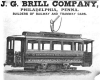
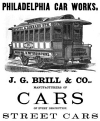
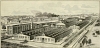
| Hinweise | [Poor's Manual of Railroads 26 (1893)] Anzeige mit Wagen der "Eckington and Soldier' Home Railway" (Washington); [Manual of the Railroads of the United States (1873/74) Anzeige]: Wagen der "Fayette & Lombard": [Philadelphia and popular Philadelphians (1891) 105]: Werksansicht |
| Zeit |
Ereignis |
| 1871 |
Erbaut 1871 |
| 1876 |
Bau des Hauptlagers und des Holzlagers |
| 1876 |
Bau der Lackiererei |
| 1887 |
Die Arbeit im neuen Werk wird aufgenommen |
| 1887 |
Eintragung der Gesllschaft |
| 1888 |
Tod von J. G. Brill. Das Unternehmen wird von seinen Brüdern weitergeführt |
| 1890 |
Erbaut 1889 |
| 1890 |
Das Werk wird nach Mt. Moriah verlegt |
| 1892 |
Bau der Elektromotorenwerkstatt und des benachbarten Lagergebäudes für fertige Wagen |
| 1892 |
Bau der Holzwerkstatt, der Schmiede und des Holztrockenhauses |
| 1894 |
Vergrößerung des Kesselhauses |
| 1895 |
Erweiterung des Holzlagers |
| 1895 |
Vergrößerung der Schmiedewerkstätten |
| 1931 |
Otto Kuhler erhält den ersten Gestaltungsauftrag bei der "Brill Company", die an einem Wettbewerb der Union Pacific-Bahngesellschaft für einen Stromlinienzug teilnimmt, den allerdings die Pullman Corporation gewinnt. |
| 1935 |
Otto Kuhler entwickelt den Brill-Prototyp 7001 der PCC-Straßenbahn für Chicago |
| Produkt |
ab |
Bem. |
bis |
Bem. |
Kommentar |
| Wagen |
1874 |
[Wiley: American iron trade (1874)] |
1874 |
[Wiley: American iron trade (1874)] |
Vorgabe: Cars |
| Zeit |
Objekt |
Anz. |
Betriebsteil |
Hersteller |
Kennwert |
Wert |
[...] |
Beschreibung |
Verwendung |
| 1879 |
Dampfkessel |
1 |
|
unbekannt |
|
|
|
|
|
| 1890 |
Dampfkessel |
3 |
|
unbekannt |
|
|
|
|
|
| 1896 |
Dampfkessel |
4 |
|
unbekannt |
|
|
|
|
|
| Zeit |
gesamt |
Arbeiter |
Angest. |
Lehrl. |
männl. |
weibl. |
Kommentar |
| 1879 |
80 |
|
|
|
|
|
70 Männer, 10 Jungen |
| 1890 |
500 |
|
|
|
|
|
500 - 600 Arbeiter (ca. 50 Jungen, Rest Männer) |
| 1892 |
800 |
|
|
|
|
|
800 - 900 Arbeiter (ca. 50 Jungen, Rest Männer). |
| 1896 |
800 |
|
|
|
|
|
800 - 900 Arbeiter (ca. 50 Jungen, Rest Männer) |
Zeit = 1: Zeitpunkt unbekannt
| Zeit |
Bezug |
Abfolge |
andere Firma |
Kommentar |
| |
dort tätig |
danach |
Otto Kuhler |
|
| ZEIT | 1891 |
| THEMA | Beschreibung |
| TEXT | The works of the J. G. Brill Company, a view of which is presented below, are located at Mt. Moriah, a station of both the Pennsylvania Railroad and the Baltimore and Ohio Railroad, a few miles from Philadelphia. The site embraces eighteen acres enclosed by a high board fence - the tracks of the aforesaid railroads enter the grounds, affording the best shipping facilities to all points. The shop buildings with one exception are one story or a story and a half structures of corrugated iron. The office building on the left is of brick, four stories high and 172 feet by 40 feet. It contains the offices of the company, draughting rooms, storage vaults, store rooms for material, brass trimmings, upholstering material and numerous small parts that enter into the construction of a car, the pattern rooms and time-keeper's room. The machine shop is a building 155x60 feet, fully equipped with iron working tools, drill presses, lathes, key seating machines, a 100-ton wheel press, and emery wheels for polishing and grinding. The truck shop in rear of the machine shop is 125 feet by 35 feet. Three tracks run the entire length of the building, which is equipped with an overhead trolley crane for handling heavy parts. The lumber sheds are located in the rear of the place and cover a large space. The pumping station and oil house near by occupy a low fire-proof structure. An artesian well 275 feet deep supplies the water for the boilers. There are two tanks for holding water, one of 25,000 and one of 30.000 gallons capacity, and a storage cistern of 50.000 gallons capacity. The dry-kiln has a capacity of 100.000 feet of lumber, and unusual care is taken in the selection and seasoning of lumber, as it insures long life and durability, and is one secret of the success of the Company. The lumber sheds are extensive, one 338 x 56 feet and one 170 x 28 feet, with extensive new sheds in course of erection. The power for driving the machinery is supplied by a 300 horse-power engine built by I. P. Morris, and driven by steam from three Connery boilers. The wood-working mill building, No. 3, is of brick 165 x 80 feet with two stories and lantern. There are seventy-two wood working machines of the latest approved makes. Building No. 2. is the erecting shop 1S0 feet by 120 feet, one story containing store room for finished material and a decorators' room. It is roomy and well lighted, having about 8700 lights of glass. From the erecting shop the cars go to building No. 15, known as the packing shop, where the bodies are filled and prepared for the paint shop. A portion of the packing shop is occupied by the electric companies, who are engaged in wiring the cars and mounting
the motors upon the trucks. The paint shop has a capacity of sixty cars at a time, seven tracks extend through it. All the buildings are heated by steam, over 87.000 feet of pipe being employed. There are two lines of transfer tables, one in the foreground and the other between the line of buildings, which provide for readily transporting cars to the shipping station. An eating home 70 x 20 ft. has recently been erected for the accommodation of the officers
and employ ees of the works. To ensure the safe delivery of cars, the Company own twenty flat steam cars, fifty to sixty feel on which two cars can be shipped, some of these cars are covered being 16 feet in height. These works were originally established by John G. Brill and his son G. M. Brill, at Thirty-first and Chestnut streets in 1868. The establishment was at first designed exclusively for the manufacture on a small scale of street car materials, but by degrees the present line of business was entered upon. After a few mouths experience, thirty-four cars were built for the People's Railway, Baltimore, and fifty-two for a St. Louis Company. The work being of a high character, other orders quickly followed from Cincinnati, from Oil City (for inclined cars), from Salt Lake City and Mexico. They received an order for cars to run on a railway terminating in the exposition building at Vienna, Austria. These and many other orders were successfully filled and are among the early triumphs of the J. G. Brill Company. The works at Thirty-first street covered an area of about 4,5 acres, and soon the ground and facilities were insufficient for the increasing business. In 1887 work was begun at the present location which was then a wild tract full of gorges and irregular knolls, but now as shown above is occupied by fine buildings and machinery, giving the Company facilities for turning out a vast amount of work, and for competing favorably in style and quality with the work of other car builders. Employment is given to 700 hands. Every kind of a car that runs on rails is manufactured to order, and the trade extends over the United States, Mexico, Central and South America. Mr. J. G. Brill was born in Germany; upon coming to this city he entered the employment of Murphy & Allison, car builders. The Company was incorporated in 1887, and since the death of Mr. J. G. Brill in 1888, the business has been conducted by the three brothers G. M., John A. and Edward Brill, ami James Rawle, the secretary and treasurer of the Company, who has been connected with them for the past twenty years, and has more than ably filled the duties of his position. Each of the Messrs. Brill has his special work in the conduct of the business. Mr. G. M. Brill is general manager of the works. Mr. John A. Brill travelling man of die firm and also gives especial attention to inventing and patenting new devices, while Mr. Edward Brill superintends the buving and care of lumber and material, and has a general oversight of the out door work. The works were removed from Philadelphia to the present site in September, 1890. |
| QUELLE | [Philadelphia and popular Philadelphians (1891) 105] |
|