|
|
Henry Disston & Sons, Keystone Saw, Tool und Steel Works
Zum Vergrößern Bild anklicken
|
| Name | Henry Disston & Sons, Keystone Saw, Tool und Steel Works |
| Ortssitz | Philadelphia (Penns.) |
| Straße | Front Street |
| Art des Unternehmens | Eisenwarenfabrik |
| Anmerkungen | Firma (1868): "Henry Disston"; 1874 unter obiger Firma. Adresse (1868): Laurel Street; (1874): Front and Laurel Streets. This is the largest saw works in the world, with a product of five tons of finished saws per day. [Wiley]: mit Zusatz "Keystone Saw Works"; siehe auch: "Keystone Saw, Tool, Steel and File Works". Auch als "Keystone Saw, Tool & Steel Works". 1873 mit dem Zusatz "Keystone Saw, Tool und Steel Works"; mit Stahl- und Walzwerk. Herstellung von Werkzeugen und Sägen; mit Dampfkraft; genaue Zahl der Kessel und Maschinen schwer zu ermitteln, etliche Dampfkessel und -maschinen; Lage: N. Front Street, Richmond Street und Laurel Street (Südost-Ecke). Vergl. auch "Keystone Works" in Germantown. |
| Quellenangaben | [Wiley: American iron trade manual (1874) 147] [Bishop: History of American manufacturers 3 (1868) 40] [Hexamer General Surveys, Plate 693-694 (1873)] [Philadelphia and popular Philadelphians (1891) 133] |
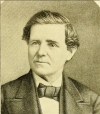
| Hinweise | [Philadelphia and popular Philadelphians (1891) 133]: Portrait von Henry Disston |
| Zeit |
Ereignis |
| 1833 |
Die Familie Disston kommt aus England nach Philadelphia |
| 1840 |
Erbaut |
| 1840 |
Beginn in einem Keller in der Broad Street in der Nähe der Second und Arch Street |
| 1859 |
Disston erhält ein Patent auf eine neuartige Kombinationssäge |
| 1878 |
Tod von Henry Disston |
| Produkt |
ab |
Bem. |
bis |
Bem. |
Kommentar |
| Betrieb von Eisenhüttenwerken |
1876 |
[Ironworks of the U.S. (1876)] |
1876 |
[Ironworks of the U.S. (1876)] |
Siehe betriebene Werke! |
| Sägen |
1874 |
[Wiley: American iron trade (1874)] |
1874 |
[Wiley: American iron trade (1874)] |
Vorgabe: Saws |
| Zeit |
Objekt |
Anz. |
Betriebsteil |
Hersteller |
Kennwert |
Wert |
[...] |
Beschreibung |
Verwendung |
| 1866 |
Dampfkessel |
10 |
|
unbekannt |
|
|
|
|
|
| 1866 |
Dampfmaschinen |
2 |
|
unbekannt |
|
|
|
|
|
Zeit = 1: Zeitpunkt unbekannt
| ZEIT | 1868 |
| THEMA | Firmenbeschreibung |
| TEXT | On Laurel street, Philadelphia, is undoubtedly the most extensive in the United States, and probably the largest in the world. All the operations incidental to the manufacture of Saws of all kinds are carried on here, (including the Steel making,) on a scale of unsurpassed magnitude, and not only Saws, but all the minor constituent parts and adjuncts, from a saw Screw to a saw File. The buildings on Laurel street cover two hundred and fifty thousand square feet of ground, and comprise a Rolling Mill, two hundred and forty by seventy-five feet; a warehouse for the reception of raw stock, one hundred and twenty by seventy feet; a Machine Shop and Main Saw Factory, two hundred by one hundred feet, three stories in height; a Wood working department seventy-five by forty feet, four stories high; a Blacksmith's, Hardening and File Shop, and Brass Foundry, two hundred by one hundred feet, and sundry other buildings of less dimensions. In the Lumber Department, a stock of three hundred thousand feet of Beech and Apple wood for Saw handles, is at all times in process of seasoning. On the north side of Haydock street there is another building fifty by two hundred and fifty feet, three stories high, in which Butcher Knives and Trowels and Reaping Knives, etc., are made. These works are no less remarkable for the wonderful efficiency of their tools and machines than for their extent. To illustrate : To toothe five dozen Wood-Saws in an hour, is rapid work for the best mechanic in the world; Mr. Disston has machinery by which one man can toothe thirty dozen in the same time. He can toothe perfectly a sixty inch Circular Saw in two minutes, which by the old process would require the labor of one man two hours. The tempering process, which is patented, is most complete, and saves at least one-third the labor ordinarily required, or in other words sixty men can do as much work as one hundred formerly did. The apparatus for grinding is novel, inasmuch as it includes machinery that will grind both sides of a saw at one operation, and long as well as short saws. We believe that the machines in the Grinding Department are the only ones of the kind in the world. Mr. Disston has also a new process for stiffening saw blades, or in other words, refining the grain after tempering, by repeated blows of a steam hammer. In the Rolling Mill, there are forty melting holes for making Cast Steel, and three sets of rolls, the largest being capable of turning out a saw plate sixty-four inches in diameter. This mill gives its proprietor the ability to fill an order for any saw, however extraordinary the size, in a few days, that would otherwise have required months. The steel is made from the best brands of Swedish and Norway Iron; Mr. Heury Disston is a man of remarkable force and energy of character, and possesses administrative and executive abilities of high order. He commenced the business, without the advantages of a capital, and it is said when he began, he wheeled the coal he required from the wharf in a wheelbarrow. He was the first manufacturer who effectually checked the importation, of foreign saws, and competed successfully with the English in Hand and Back Saws. While engaged in this contest, he sold saws at a profit of only seven cents per dozen, over the cost of manufacture. He possesses a highly original and inventive mind, and has so far revolutionized the details of manufacturing saws, that a Sheffield workman, however experienced in the methods practiced abroad, would be lost amidst the new and labor-saving machinery of this establishment. Mr. Disston's name appears in the records of the Patent Office in connection with more than twenty improvements, in this branch of manufactures. In 1859, he patented a novel combination Saw, with Square, Rule, Plumb and Level, Scratch Awl and Gauge attachments. He has made some improvements in Circular Saws, with moveable or inserted teeth, and has recently devised a form of tooth, only deep enough to receive the dust, which will so much increase the endurance and effective power of saws that, by its adoption, it is believed a million of dollars in saw plates, may be saved to the country annually. He claims that the points of saw teeth should be varied according to their use, whether for hard or soft wood, and that the old method of making the teeth of one uniform shape, for all kinds of wood, is entirely erroneous. Among his recent patents, is one for grinding Rolls either flat, round or hollow, without the necessity of taking them from their bearings. [ Mr. Disston is one of the few men who combine, in their mental; organization, creative and executive faculties. His inventive genius is shown in the improvements he has originated; his practical sagacity is demonstrated, by the magnitude of his Works, which now produce nearly one fourth of all the saws annually required in the United States. He employs, in the various departments, over four hundred men; consumes over three thousand tons of coal yearly, and produces in the same time, a value of nearly two hundred thousand dollars in Steel and three quarters of a million of dollars in Saws. |
| QUELLE | [Bishop: History of American manufacturers 3 (1868) 40] |
| |
| ZEIT | 1891 |
| THEMA | Beschreibung |
| TEXT | The Henry Disston & Sons, Keystone Saw, Tool, Steel and File Works which now cover an area of twenty-four acres to which new buildings are constantly being added at Tacony, Philadelphia, were started in 1840, as the Disston Keystone Saw Works, in a cellar on Bread street, near Second and Arch streets, Philadelphia. The Disston family consisting of father, son and daughter, arrived in Philadelphia from England in 1833. In three days the father was dead; when young Henry Disston, a boj of fourteen and without money, in looking around for employment apprenticed himself with a saw making firm. The employers of the young man could not pay him in money a small amount of back wages when he derided to leave them, so he was compelled to accept a lot of brick trowels which he managed to turn into cash. He realized about
350, and with this sum the Disston Keystone Saw Works on Bread street were started. Mr. Disston would tell with pride the humble manner in which he began, how he built his own furnace, trundled his first wheel-barrow of coal from Willow street wharf to the "works", made his own tools, and in fact ran the whole business without help. Having made his saws, he himself took them out on sale, but it was a long while before he could make the people believe that an American saw was any tiling but a poor imitation of the English article. He was discouraged many times, but never lost heart. He often sold a saw at an advance of one per cent, profit. He took a room in a factory at Front and Meriden streets, and though he owed nothing he was merely a subtenant and his effects were levied upou for the rent of the building. Money was advanced by an old friend who appeared at the most opportune moment, and a new landlord taking the building Mr. Disston resumed operations. He had borrowed 200. It enabled him to branch out a little and now he was more determined than ever to succeed. Just about this time the boiler in the building exploded and the structure was destroyed by fire, and young Disston was very severely injured. Within ten days he moved into a new building adjoining the old shop. In 1864 the business had grown to 35.000 a mouth. Fire again destroyed everything but in fifteen days saws were being manufactured on the old site under a roof of canvas. Substantial buildings were quickly erected until the establishment at Front and Laurel streets covered a number of acres extending in the rear to both sides of Haydock street. He decided to no longer import English steel and turned his scraps into steel in his own establishment. For this purpose rolling mills directly adjoining the works on Laurel street were built together with a melting department, and in this new adjunct all the iron and steel used in the several factories was produced. The tariff of 1861 gave the Henry Disston
saws their first great start and he created a new industry, founded au industrial university where a dozen useful trades are taught, and finally established at Tacony, on the Delaware river, and in the City of Philadelphia, the greatest saw works in the world. Mr. Disston put his own sons in the shop. Hamilton, now the active head of the firm served seven years before he was taken into the counting room. Albert H., now deceased, Horace C., William and Jacob S., the other partners, also served their time before they were admitted to partnership. Henry Disston dying in the year 1878, left his sons fully competent to carry on the enormous business, and these young men have pushed the capacity of the works far what it was in their father's time. The average number of men employed is 1900. In 1890 the ground enclosed by the factory was 38 acres, the number of buildings 19, horse power utilized 2,250, coal consumed 24.780 tons yearly; lumber consumed for saw handles 1.000.000 feet yearly; lumber used for shipping goods, 900.000 feet yearly; grindstones consumed, 900 tons yearly; steel consumed in file factory, 12 tons weekly; sheet steel produced, 4.300 tons yearly; bar steel produced, 7.000 tons yearly; hand saws manufactured, 25.000 dozen weekly; circular saws manufactured all sizes, 50.000 yearly; cross-cut, mill, mulay and drag saws, 200.000 yearly; hact and butcher saws, 6.000 dozen yearly; compass, keyhole and webb saws, 43.000 dozen yearly; brick trowels, 4.200 dozen yearly; files, 1.000 dozen daily. In the melting department there are all Siemen's gas furnaces. The ingots are pressed by hydraulic
pressure. The steel is made from English and American iron and selected steel scraps. 28 tons of steel are produced per day. In the upper mill 4 tons of hand-saw steel and 5 tons of merchant steel are made per day. In the large plate mill 5 tons of circular steel, and roll plates 84 in diameter arc made each day. In the lower mill 6 tons saw steel for cross-cuts and long saws per day. In the Rod mill used for rolling bar and band saw steel, the output is 10 tons per day. In the Train mill for rolling file steel and all small sizes and shapes of merchant bar steel, the output is 3,5 tons per day. The furnace for hardening and tampering saws has a capacity for 70 large circular-saws and 1.000 cross-cuts. A hand saw furnace for hardening has au output of 425 dozen per day. In the long saw cutting out department 1.000 saws is the daily output; hand saws and small work cutting out department output 425 dozen daily; band saw, cutting out, and finishing department, 25 saws 8 by 50 feet, and 400 band saws weekly; circular saw department output per day 25 large and 200 small size; Inserted tooth department, capacity for inserted tooth circular-saws 10 per day; smithing and finishing circular department, 20 large and 200 small per day; cross-cut and long saw department, grind, glaze and block 800 cuts per day; smith and hammer department, 275 dozen hand saws per day; finishing department, 150 dozen best saws and 285 dozen assorted saws are completed daily; grinding department. 263 dozen per day; grinding and drawing department, 260 dozen per day; glacing department, 341 dozen per day; handle department, 350 dozen hand saws, 75 dozen cut handles, and 60 dozen frames per day; file department, 1.000 dozen of every size and description daily; tooth department, daily output 100 gross saw sere dozen try screws, 20 dozen bevels, 50 dozen screw drivers, 50 dozen
plumb and level, 20 dozen gauges, 20 sets butt hinges. In the box and circular-saw case department, 750.000 feet of pine lumber consumed each year. The present officers of the firm are Hamilton Disston, President; Horace Disston, Vice-President; William Disston, Second Vice-President; Jacob Disston, Treasurer; Samuel Disston, Agent. The capital invested in the plant is 5.000.000. |
| QUELLE | [Philadelphia and popular Philadelphians (1891) 133] |
|


