|
|
Isaac A. Sheppard & Co., Excelsior Stove Works, Werk Berks Avenue
Zum Vergrößern Bild anklicken
| Name | Isaac A. Sheppard & Co., Excelsior Stove Works, Werk Berks Avenue |
| Ortssitz | Philadelphia (Penns.) |
| Straße | Berks Avenue |
| Art des Unternehmens | Eisengießerei und Ofenfabrik |
| Anmerkungen | Adresse 1874: Berks und Montgomery Avenue; 1873/82/90: Montgomery Avenue, N. 4th Street, 3rd Street und Berks Street (Nordost-Ecke). These works are extensive; have a melting capacity of 20 tons a day, and a product of 8,000 tons a year, with a floor-room of nearly two acres. Works also at Baltimore. Um 1866 siehe Werk in der Girard Avenue. Herstellung von Herden und Töpfen. |
| Quellenangaben | [Wiley: American iron trade manual (1874) 147] Anzeige von 1890 (Internet) [Hexamer General Surveys, Plates 681-682+1724 (1873+1882)] [Philadelphia and popular Philadelphians (1891) 152] |
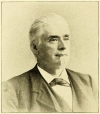
| Hinweise | [Philadelphia and popular Philadelphians (1891) 151]: Portrait von Isaac A. Sheppard |
| Zeit |
Ereignis |
| 1859 |
Bau der Hauptgebäude |
| 1873 |
Ergänzungsbauten 1872 |
| 1882 |
Erweitert |
| Produkt |
ab |
Bem. |
bis |
Bem. |
Kommentar |
| Gußeisen |
1874 |
[Wiley: American iron trade (1874)] |
1874 |
[Wiley: American iron trade (1874)] |
auch: plumbers and general castings. |
| Hohlgefäße |
1874 |
[Wiley: American iron trade (1874)] |
1874 |
[Wiley: American iron trade (1874)] |
Als Spezialität |
| Öfen/Herde |
1874 |
[Wiley: American iron trade (1874)] |
1874 |
[Wiley: American iron trade (1874)] |
Als Spezialität |
| Zeit |
Objekt |
Anz. |
Betriebsteil |
Hersteller |
Kennwert |
Wert |
[...] |
Beschreibung |
Verwendung |
| 1873 |
Dampfmaschine |
1 |
|
unbekannt |
|
|
|
|
|
| 1882 |
Dampfkessel |
1 |
|
unbekannt |
|
|
|
|
|
| Zeit |
gesamt |
Arbeiter |
Angest. |
Lehrl. |
männl. |
weibl. |
Kommentar |
| 1873 |
250 |
|
|
|
|
|
2/3 Männer, 1/3 Jungen) |
| 1882 |
250 |
|
|
|
|
|
2/3 Männer, 1/3 Jungen |
| ZEIT | 1891 |
| THEMA | Beschreibung |
| TEXT | The Excelsior Stove and Hollow-ware Foundry was established under the firm name of Isaac A. Sheppard & Co. The co-partnership was entered into by Isaac A. Sheppard, Jonathan A. Biddle, James C. Harn, William B. Walton and John Sheeler. Subsequently Thomas Walbrook and Daniel Weaver were admitted into the firm. The business commenced in 1859 at Seventh street and Girard avenue. In 1866 the same firm established the Excelsior Stove and Hollow-ware Foundry in Baltimore, Maryland. This establishment and the present house in Philadelphia give employment to from five to six hundred hands, and the product is to the value of from 600.000 to 700.000 annually. The capital employed in the firm was obtained by the contributions of its different members, the partners relying on their intelligence and labor to supply the place of capital in the rivalry they had commenced with the wealthier and longestablished houses who, in order to drive them out of the market, sold their own goods below cost. They won the confidence of the public, and 1861 at the outbreak of the war found them in the most prosperous condition. The firm felt satisfied that the change in the domestic relations of the slaves would largely increase the demand for cooking stoves South, and by the creation of their Baltimore foundrv they put their faith to the test. The Baltimore plant turned out from fifteen to twenty tons of castings per day. The Philadelphia foundrv entirely outgrew its capacity, and in 1871 the firm purchased of the Frankford and Southwark Passenger Railway Company their present site. It includes more than two and a half acres and occupies the entire square 500 feet by 235 feet included between Third and fourth streets and Berks street and Montgomery avenue. The buildings have several times been enlarged until they now cover an aggreate area of 76,000 feet. This establishment produces from thirty to forty tons of castings per diem, and with that in Baltimore turns out about 18.000 tons per annum, in which are included 45.000 to 50.000 stoves, heaters, ranges, hoi low-ware, plumber's goods, and miscellaneous castings. There are 127 varieties of cooking stoves and ranges, no varieties of heaters and heating apparatus. The motive power is obtained from an improved engine, and the transmission is over a steel wire rope five-eighths of an inch thick running over a sheave eight feet in diameter at the rate of two-fifths of a mile per minute, the power being conveyed to a great distance with much less loss from friction than by ordinary belting. Though largely used in Switzerland, where it originated, this is the first extended application of the contrivance in this section of the United States. All the business of the firm is under the immediate supervision of the members, who are themselves skilled mechanics with practical experience in all the departments of their business. They take merited pride in the fact that their early struggles, their signal triumph over all difficulties, have landed them in the proud place they hold in the estimation of the public to-day. To these facts and their strict integrity and punctuality can be attributed much of the success which has marked their business operations. The improvements in the manufacture of stoves within a few years, specially by such firms as that of Isaac A. Sheppard & Co., have been so remarkable as to be almost incredible to the casual looker-on. Many of the stoves manufactured by this firm are of an ornamental character, used in parlors and sitting-rooms of the occupants of small houses. This stove serves not only to heat the apartment,
but to set it off and make it attractive. The stove certainly gives to the room a more home-like appearance than the furnace. Isaac A. Sheppard, the senior member of the house, was born in Cumberland County, New Jersey, July 11, 1827. His ancestors were among the first settlers in that county. His only schooling was at a country school-house, which held, or "kept," as they say in the country, but three months a year. His schooling of this sort ceased when he was eleven years of age, when he was compelled to earn his own living and began his experience in the great school of life. He came to Philadelphia in 1840, and for three years worked at odd jobs whenever he had an opportunity, meanwhile looking about him to learn some mechanical trade. Finally he obtained an opening and in July, 1843, entered a brass and iron foundry. He soon became a skillful moulder and won the confidence and appreciation of his employers. He kept closely to work for six years, saving up his money with the intention to commence business on his own account. When the stove foundry had been established for a number of years Mr. Sheppard became one of its originators and a Director in the National Security Bank of Philadelphia; later he was elected its President, which position he still holds. He is a Director in the Northern Safe Deposit and Trust Company of Philadelphia. He is prominent in religious circles, is an active member of the Protestant Episcopal Church, and Superintendent of the Sunday School of the church to which he belongs. He was a delegate to the Diocesan Convention and took part in the election of three bishops of the church in
Pennsylvania. He is also prominent in several fraternal organizations. He was elected Grand Master of the Independent Order of Odd Fellows of Pennsylvania in 1874. In 1877 he was elected to represent the Grand Lodge of Pennsylvania
in the Sovereign Grand Lodge of the Order. He is President of one the societies of organized charity and is connected
with numerous other benevolent organizations. He served three terms as a member of the House of Representatives of
Pennsylvania, and that part of his service in Harrisburg in which he has the greatest pride is that he was one of the originators and had charge of the bill which became the law-regulating Building Associations. It is to this bill that is due that so many thousands of the workingmen of Philadelphia own their own homes. He was the Chairman of the Committee of Ways and Means in 1861, and he had charge of the legislation to sustain the National Government during the Rebellion. Under his leadership during the same year were passed the bills to "strengthen the public credit." Mr. Sheppard during the sickness and absence of the Speaker of the House was elected Speaker pro tem., and for more than one-third of that memorable session (1861) discharged the duties of the Chair to the satisfaction of the members and with credit to himself. In 1867 he was elected by the Councils of Philadelphia as Trustee of the Northern Liberties Gas Company and he still retains this position. He was appointed a member of the Board of Public Education of Philadelphia by the Court of Common Pleas in 1879. He has always taken an active part in all the works of the Board, and has been especially prominent as Chairman of the Committee on Night Schools. Itis largely due to Mr. Sheppard's efforts and to the proficiencv to which he aided in bringing these schools that City Councils doubled the appropriation for their maintenance. He was one of the committee charged with the establishment of the Public School of Industrial Art, and also one of the committee to whom was committed the plan and organization of the Public Manual Training School. In January, 1889, he was elected President of the Board of Education and was re-elected in 1890/91. This highly honorable position Mr. Sheppard still holds. |
| QUELLE | [Philadelphia and popular Philadelphians (1891) 152] |
|