|
|
James Moore, Bush Hill Iron Works
Zum Vergrößern Bild anklicken
|
| Name | James Moore, Bush Hill Iron Works |
| Ortssitz | Philadelphia (Penns.) |
| Straße | 16th Street |
| Art des Unternehmens | Maschinenfabrik |
| Anmerkungen | Anfangs: unter der Firma "Neall, Matthews & Moore"; vor 1872: "Matthews & Moore". 1872 mit dem Zusatz "Bush Hill Iron Works". Lage (1872): Springgarden Street, 15th Street, 16th Street, Bottonwood Street. Works includes foundry, boiler shop, machine shop, and has a specialty in rolls and rolling-mill machinery. The product of this works is to found in all the new and best equipped rolling mills of the country, and by many the work done here is preferred to that from any other establishment. The demand for machinery from this works is so great as to keep orders constantly ahead of production. Auch Brückenbau und Kesselschmiede. |
| Quellenangaben | [Wiley: American iron trade manual (1874) 140] [Hexamer General Surveys, Plates 617+618 (1872)] [Philadelphia and popular Philadelphians (1891) 143] |
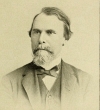
| Hinweise | [Philadelphia and popular Philadelphians (1891) 143]: Portrait von James Moore |
| Zeit |
Ereignis |
| 07.08.1818 |
Geburt von James Moore auf einer Farm in Country Down, Irland |
| 1827 |
James Moore kommt mit seinem Vater aus Irland nah Philadelphia |
| 1834 |
James Moore beginnt eine Lehre bei "Coleman Sellers & Co." in Upper Darby, Delaware County |
| 1843 |
James Moore arbeitet (vmtl. als Mechanikermeister) bis 1843 bei der "Bush Hill Oil Cloth Factory" in Philadelphia und arbeitet dann bei "I. P. Morris & Co." |
| 1846 |
James Moore scheidet bei "I. P. Morris & Co." aus und gründet seine Bush Hill Iron Works unter der Firma "Neall, Matthews & Moore" |
| 1850 |
James Moore (Bush Hill Iron Works, Philadelphia) besucht Kuba und legt die Grundlage für die Fertigung von Zuckerfabriksmaschinen. |
| 1852 |
James Moore heiratet |
| 1870 |
James Moore wird Alleineigentümer |
| Produkt |
ab |
Bem. |
bis |
Bem. |
Kommentar |
| eiserne Brücken |
1872 |
[Hexamer] |
1872 |
[Hexamer] |
|
| Hochofen-Maschinen |
1874 |
[Wiley: American iron trade (1874)] |
1874 |
[Wiley: American iron trade (1874)] |
Vorgabe: blast furnace machinery |
| Kessel |
1872 |
[Hexamer] |
1872 |
[Hexamer] |
unsicher, ob auch Dampfkessel |
| Walzwerksmaschinen |
1874 |
[Wiley: American iron trade (1874)] |
1874 |
[Wiley: American iron trade (1874)] |
Vorgabe: Rolling mill machinery |
| Zuckerfabriksmaschinen |
1850 |
ab 1850 |
|
|
|
| Zeit |
Objekt |
Anz. |
Betriebsteil |
Hersteller |
Kennwert |
Wert |
[...] |
Beschreibung |
Verwendung |
| 1872 |
Dampfkessel |
2 |
|
unbekannt |
|
|
|
|
|
| ZEIT | 1891 |
| THEMA | Beschreibung |
| TEXT | There is probably no one better known in the iron and steel industries in the City of Philadelphia than Mr. James
Moore, proprietor of the famous Bush Hill Iron Works, one of the most extensive manufactories in this city, which
covers one square and two-thirds, with a frontage of 670 feet on Buttonwood street and 208 feet on Spring Garden
street, where they employ about 350 men when running on full time. Mr. Moore's successful career in business
furnishes another illustration of what can be done by industry and perseverance. He was born in County Down, Ireland,
August 7, 1818, on a farm upon which his ancestors for generations had been born and raised, and he came to this country with his father in 1827, locating in the City of Philadelphia. He received his education in the public schools, and ever since has been closely identified with the growth and interests of the city. At the age of sixteen he left school and selected the machinery business by entering as an apprentice with the well known firm of Coleman Sellers & Co., the works of whom were located in Upper Darby, Delaware county. The firm did a large business in paper mill work and stationary engines, and were the pioneers in building locomotives. Mr. Moore manifested great aptitude for his trade. Showing marked mechanical ability, he was given every opportunity to gain a thorough knowledge in the machine business. On August 7, 1839, he found the iron industries of the couutry completely prostrated, owing to the low tariff of 1833 then iu force. Shortly thereafter he was given the position as master mechanic of the new railroad opening up from Chambersburg to Hagerstown. A better pecuniary position was offered to him by the proprietors of the Bush Hill Oil Cloth Factory in Philadelphia, operated by Isaac Macauley, which he accepted, and remained until 1843 in charge of
the works. Mr. Moore was not satisfied with the business and accepted a position with I. P. Morris & Co., one of the leading concerns at that time in the City of Philadelphia, and in a lew months later was placed in full charge of the machine shops, where he remained until the spring of 1 846 .when the nucleus of the present Bush Hill Iron Works was formed. Four gentlemen, each having charge of four different departments, entered into partnership and operated under the title of Neall, Matthews & Moor. The location on which the present works stand was formerly occupied by Oliver Evans, Rush cc Mulenberg, who had been doing quite an extensive business in engines and millwrighting. The firm at once took quite a prominent position in the engine and rolling mill trade, which steadily increased. In 1850 Mr. Moore visited Cuba, and laid the foundation of a business in sugar machinery which grew to large proportions, and further progress in the business was stopped in consequence of the civil war in that country. The partners one by one withdrew, and the works finally passed into the control and ownership of Mr. Moore in 1870. He had very extensive dealings with nearly all the large iron and steel workers in the United States, particularly the steel rail mills, and most of them
are largely indebted to his skill and knowledge of the business for the plants they have up to the present day. Mr. Moore was married in 1852, and has two living daughters and one son, the latter taking quite an extensive interest in
the business. The large tract of land on which the buildings are erected is the property of Mr. Moore, as the result of years of industry and close application to business. The house is noted throughout our leading commercial and financial circles for its honorable methods of doing business and sterling integrity, and stands as a tower of strength and one
of the best representative concerns of its kind in the City of Philadelphia. Mr. Moore is a member of the Manufacturers' Club and is one of our public spirited and influential citizens. |
| QUELLE | [Philadelphia and popular Philadelphians (1891) 143] |
|


