|
|
William C. Allison & Sons, Junction Car Works & Flue Mill
Zum Vergrößern Bild anklicken
|
| Name | William C. Allison & Sons, Junction Car Works & Flue Mill |
| Ortssitz | Philadelphia (Penns.) |
| Straße | 31st Street |
| Art des Unternehmens | Fahrzeugfabrik |
| Anmerkungen | Adresse (1874): Thirty-first and Walnut Streets; 1868: von Walnut bis Spruce streets; [Hexamer]: 32nd Street, Lehman Street, Walnut Street und Spruce Street, an der West Chester & Philadelphia Railroad. Inhaber (um 1875): W. C. Allison & Sons und "Allison Manufacturing Co." (1890/91). Baute insbesondere Güterzugwagen und stellte geschweißte und schmiedeeiserne Rohre her. Mit Modellwerkstatt, Hammerschmiede, 2 Lokomotiven, Dampfpumpen. Anzahl der Dampfmaschinen unbekannt (2 Maschinenräume auf dem Plan). Bei [Hexamer] mit dem Zusatz "Junction Car Works & Flue Mill". |
| Quellenangaben | [Wiley: Am. iron trade manual (1874) 133] [Bishop: History of Am. manufacturers 3 (1868) 39] [Hexamer Gen. Surveys, Plates 426+437+899-901+1655+2329-2330 (1870+1875+1882+1890)] [Philadelphia and pop. Philadelphians (1891) 123] |
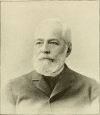
| Hinweise | [Philadelphia and popular Philadelphians (1891) 122]: Portrait von W. C. Allison |
| Zeit |
Ereignis |
| 1817 |
Geburt von W. C. Allison in Chester County, Pennsylvania, als Kind einer Quäker-Familie. - Er besucht die Dorfschule und im Wintr eine Abendschule. Früh geht er bei einem Wagner in die Lehre und setzt den Beruf als Geselle fort |
| 1836 |
W. C. Allison macht sich in der Broad Street in der Nähe der Vine Street selbständig |
| 1840/41 |
In der Frühzeit der Eisenbahn beginnt W. C. Allison mit dem Eisenbahnwagenbau |
| 1851 |
W. C. Allison gründet mit John Murphy ein gemeinsames Unternehmen unter der Firma "Murphy & Allison". Der Eisenbahnwagenbau wird mit großer Energie vorangetrieben |
| 1859 |
Der Lebensmittelhändler Eward C. Knight in Philadelphia schließt mit der Firma "Murphy & Allison" (später: "Allison Manufacturing Co.") den Vertrag zum Bau eines Schlafwagens ab, der zuerst auf der Baltimore and Ohio Railroad eingesetzt wird. |
| 1862 |
Erbaut |
| 05.1863 |
Das frühere Werk wird durch ein verheerendes Feuer vernichtet. |
| 1870 |
Erweiterungsbauten |
| 25.07.1872 |
Ein Feuer zerstört fast den gesamten Betrieb |
| 01.05.1873 |
Übernahme der neuen Fabrik |
| 1874 |
Umgebaut 1873 |
| 1880 |
Bau der Montage- und Lackierwerkstätten an der Chestnut Street 1879 |
| 1884 |
Bau des Röhrenwerks |
| Sept. 1883 |
Eintragung der "Allison Manufacturing Company" |
| Produkt |
ab |
Bem. |
bis |
Bem. |
Kommentar |
| Kamine |
1874 |
[Wiley: American iron trade (1874)] |
1874 |
[Wiley: American iron trade (1874)] |
Vorgabe: Flues |
| Rohre |
1874 |
[Wiley: American iron trade (1874)] |
1874 |
[Wiley: American iron trade (1874)] |
Vorgabe: Pipes |
| Wagen |
1874 |
[Wiley: American iron trade (1874)] |
1874 |
[Wiley: American iron trade (1874)] |
Vorgabe: Cars |
| Zeit |
Objekt |
Anz. |
Betriebsteil |
Hersteller |
Kennwert |
Wert |
[...] |
Beschreibung |
Verwendung |
| 1870 |
Dampfkessel |
6 |
|
unbekannt |
|
|
|
|
|
| 1882 |
Dampfkessel |
7 |
|
unbekannt |
|
|
|
|
|
| Zeit |
gesamt |
Arbeiter |
Angest. |
Lehrl. |
männl. |
weibl. |
Kommentar |
| 1874 |
800 |
|
|
|
|
|
|
| 1875 |
600 |
|
|
|
|
|
584 Männer, 15 Jungen, 1 Telegraphistin |
| 1882 |
1150 |
|
|
|
|
|
25-30 Jungen, Rest Männer) |
| 1890 |
1150 |
|
|
|
|
|
25-30 Jungen, der Rest Männer |
| ZEIT | 1868 |
| THEMA | Firmenbeschreibung |
| TEXT | Are the largest of the manufactories of Philadelphia located on the west side of the Schuylkill. They are new, having been erected since May, 1863, when the former works were destroyed in a most disastrous conflagration. As an illustration of what we believe to be the most, complete establishment that has as yet been erected in the United States for building cars, it will be appropriate to devote some space to the details of its construction. The works occupy an enclosure of about five acres of ground, situated between the West Chester and Junction railroads, and extending from Walnut to Spruce streets, in West Philadelphia. Nearly all of this extensive area is covered with buildings, generally of brick and stone, one and two stories in height. The greater portion of the building fronting on Walnut street is devoted to painting cars, the shop for the purpose being two hundred and fifty-nine feet long and eighty-one feet wide. Many of the workmen employed in this department are not merely good mechanical painters, but artists, whose productions, if on canvas, would be entitled to a place in a gallery of Fine Arts. On the second floor of this building are the varnishing rooms, and also a room eighty-one by forty feet used as an erecting shop for city passenger cars. Adjoining the building just mentioned is a fire-proof structure, the lower floor of which is appropriated to offices and counting-rooms, including a fire-proof safe, which is a small room in itself, being sixteen feet long by nine feet wide, and on the upper floor are the upholstering department, pattern rooms, and rooms for the storage of valuable material. All the doors and girders in this building are of iron, and the structure is believed to be indestructible by fire. The inner office is arranged with a view of facilitating the clerk who acts as time-keeper. All the workmen make their entrance and exit through one gateway, and each man, as he enters, receives a metallic number which he returns when he leaves the yard. By means of a spring the clerk in charge of the gateway can close it without leaving the office, and all workmen who come late are known and registered. A large space of ground between the painting and erecting shop is appropriated to the transfer table, over which is an arched bridge connecting the second stories of the two buildings. Beyond is the erecting shop, two hundred and forty feet in length, eighty feet wide, and where may be seen Cars in their various stages of progress, among them some of the first class, with raised roofs and facilities for ventilation, such as approach as near perfection as the art has as yet attained. Adjoining the erecting shops on the south, are the wood working shops, one for hard, another for soft lumber; and also the repair shop, the machine shop and engine room. The greater portion of the floor above these shops is appropriated to pattern and cabinet-making, for which it is equipped with all of the most approved tools and best machines. West of these buildings, and detached, are the blacksmith shops. In the bending room is a boiler in which wood is steamed preparatory to being bent into the various curvelinear and irregular forms desired. All of the rooms are heated in winter by means of steam pipes, of which there are about eight miles distributed in coils through the different apartments. The condensed water of all these pipes is brought back and collected, to be used again to supply the boilers. In this extensive establishment about three hundred men are employed, though doubtless nearly double the number, if needed, could operate without inconvenience, and it has a capacity for turning out every week three large passenger cars, ten street cars, and thirty freight cars, without interfering with the General Jobbing and Repairing. |
| QUELLE | [Bishop: History of American manufacturers 3 (1868) 39] |
| |
| ZEIT | 1891 |
| THEMA | Beschreibung |
| TEXT | W. C. Allison, president of the Allison Manufacturing Company, was born of Quaker parents in Chester county, Penna., in 1817. His education was obtained in the village school during the winter months, supplemented by study in the night school. He was early apprenticed to a wheelwright, and after his apprenticeship expired continued his trade as a journeyman. Acquiring a small amount of money he came to Philadelphia where he soon secured employment. In his nineteenth year he commenced the making of wagons on his own account on Broad near Vine street. A few years later he formed a partnership with a relative and thev enlarged their business. In 1840-41, when steam railways were in their infancy, a demand for rolling stock was created. Mr. Allison saw his opportunity and without a moment's delay, eagerly availed himself of it. He turned his attention to car building - a pursuit he still successfully follows - but on an enlarged scale. In 1851 he formed a partnership with John Murphy, under the firm name of Murphy & Allison, and the manufacture of cars was pushed forward with great energy. They were for many years the only car builders in Pennsylvania, and did most of the work for the large transportation companies between Philadelphia and Pittsburg; as
well as for the West Chester & Philadelphia and the Germantown & Norristown Railroads. When the Pennsylvania Railroad was completed, and the alteration of the State road made, by which the terminus was removed to Market street, the firm
erected their shops on Market street west of Nineteenth; secured the best machinery attainable, and did an enormous and constantly increasing business, which necessitated from time to time additions and improvements to their already large
plant. Here were built the first reallv comfortable cars run over any road, and they had the honor of "turning out" the first sleeping car built in the United States; in addition to steam cars they built cars for city railroads - their export business in this line alone being very extensive. About this time they became the proprietors of the "Girard
Tube Works," on the Schuylkill river, at the Filbert street wharf, and added to their ventures the manufacture of butt-welded gas and steam pipes. It proved a brilliant success, as the works were the third of their kind in the country. The first trial came to the firm in May, 1863, when their car works were destroyed by fire, entailing a heavy loss, as they had on hand at the time an immense stock of material, and large contracts with the Government and principal roads. Among the property destroyed was a palace car, the first ever built, which had been constructed for the use of the President of the United States (Abraham Lincoln). Nothing daunted, the firm leased the large building of the Architectural Iron Works Company, Thirty-first and Locust streets, and within two months were again building cars. About this time they purchased the property, and located the present works, which they occupied in 1864, and which were conceded to be the largest and finest in the country, having a capacity for producing two large passenger coaches, six city passenger cars and thirty-five freight cars a week. The firm ceased building passenger cars in 1866, adopting in
its place a new branch of the trade, making lap welded iron tubing, boiler flues, gas, oil and artesian tubing and casing, the demand for which had become enormous. In the meantime, however, Mr. Murphy died, and Mr. Allison's two sons, J. W. & T. E. Allison, who had been for many years connected with the business in various capacities, were taken into partnership, and forming the firm of W. C. Allison & Sons. They at once proceeded to enlarge their capacity by erecting new buildings, but on July 25, 1872, the fire fiend again visited them, destroying nearly the whole establishment. But the firm knew no such word as "fail," and while their new buildings were in the course of construction, they occupied their old quarters, at Thirty-first and Locust streets. May 1, 1873, they took possession
of their new plant, which they have since occupied. The Allison Manufacturing Company was incorporated September, 1883. The officers of the Company are: W. C. Allison, president; James O'Neill, treasurer; L. J. Piers, secretary; F. R. Tobcy, purchasing agent. The Company now employ some 1500 men (many of whom have been employed by the present Company and their predecessors, terms varying from 25 to 40 years) who, with the excellent facilities, are enabled to turn out a train of twenty to twenty-five cars per day. The works cover over 14 acres of ground, 8 acres of which are covered with buildings, ranging in height from one to three stories. They front on Chestnut street, between Thirty-first and Thirty-second streets, (offices at Thirty-second and Walnut streets) extending south to Spruce street, and east to the
Schuylkill river, where they have large wharf frontage with piers and cranes for heavy shipping. The works are traversed by over nine miles of railroad tracks, broad and narrow gauge, and, equipped with nearly three hundred cars and several locomotives, thev have facilities for manufacturing from 2.000.000 to 3.000.000 worth of cars annually, as well as 1.500.000 to 2.000.000 annually of iron tubing. The quality and finish of these goods have been maintained of such unvarying standard that the "Allison" is recognized as the best tube made in the United States. In addition to the work already outlined, the Company is prepared to contract for working of all kinds of lumber, by carload or cargo, also iron work for cars, bridges and building. The business is divided into eighteen separate and distinct departments, each in charge of an efficient head, wdio has his own office and clerks. The many different buildings and wharves are
connected by railways, and the works are so situated as to permit goods to be received from and shipped to all parts of the country without reloading. Such is the result of one of our self-made citizens, conscientious application to business, to which he thoroughly devoted himself and which he has built up and maintained as one of the first cuterprises of this great manufacturing center, by his energy, honor and integrity. |
| QUELLE | [Philadelphia and popular Philadelphians (1891) 123] |
|


