|
|
Standard Window Glass Works
Zum Vergrößern Bild anklicken
| Name | Standard Window Glass Works |
| Ortssitz | Woodbury (N.J.) |
| Art des Unternehmens | Glaswerk |
| Anmerkungen | Adresse der Verwaltung: Camden, Market Street 9 1/2; Fabrik in Woodbury (N.J.). Eigentümer: A. C. Lamar. |
| Quellenangaben | [Historical and Industrial Review of Camden (1890) 96] |
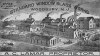
| Hinweise | [Historical and Industrial Review of Camden (1890) 96]: Werksansicht |
| Produkt |
ab |
Bem. |
bis |
Bem. |
Kommentar |
| Flachglas |
1890 |
[Hist.and Ind. Review of Camden] |
1890 |
[Hist.and Ind. Review of Camden] |
|
| Stahlschornsteine |
1874 |
[Wiley: American iron trade (1874)] |
1874 |
[Wiley: American iron trade (1874)] |
Vorgabe: "Steel pens", als Spezialität |
| ZEIT | 1890 |
| THEMA | Beschreibung |
| TEXT | Though the manufacture of glass is generally supposed to be a comparitively modern invention or discovery, the growth for the last few hundred years or so, it is not so, but only a rediscovery, since the Dark Ages, of what was known and practiced in almost prehistoric times. Paintings of the reign of Osritasen I., at Beni-Hassan, representing glassblowers making a very large vase, show conclusively that nearly 4,000 years ago - before the Hebrew exodus, and before profane history commenced—the Egyptians were proficient in this art. In the arts, the word "glass" originally applied to all shining bodies, is limited to compounds of sand, potash or soda, and lime. Oxide of manganese, litharge and red lead are also sometimes used. In Camden, the firm engaged in this industry is that of A. C. Lamar, of 9-1/2 Market street. This well know house manufactures all kinds of glass, both for building and ornamental purposes, including window, plate, colored, enameled, stained, fluted, ribbed, hammered, embossed, and cathedral glass, and also looking-glass plates, of the finer grades, this latter being a specialty. The quality is always kept at the highest standard, in order to compete successfully with that imported from France and Belgium. Bottles and glass hollow-ware of all sorts are also made. The factory is at Woodbury, a few miles from Camden, and covers a site of several acres. The buildings comprise two large furnace-houses, a flattening-house, with cutting-room attached, engine and boiler-house, a pot-house, where the pots for melting are made, together with blacksmith-shop, packing-house, warehouse and offices, and the necessary stables, out-buildings, etc. The tracks of the West Jersey Railroad run into the factory ground, by which means all the shipments are made. The entire plant is of modern improved construction, and complete in all details, with every requisite appliance for turning out the best work. The number of men employed is 150. Sixteen tons of glass are melted daily, and one hundred tons of coal and coke are consumed every week, about forty weeks constitute the working year in this industry. The output of manufactured glass per week amounts to about 160, 000 feet, averaging the value of $5,000. The process of manufacture begins in the pot-house where the melting pots are made. These are large vessels of about four feet high, and three and a half in diameter, and of the capacity of an ordinary hogshead, made of imported German clay, mixed with the burnt clay of the pots that have been used and worn out both clays being first reduced to a rough powder. These "pots" are heated before being put in the furnaces and then glazed with the glass known as "cullet", each furnace taking eight pots. The intense heat of the furnace renders the pots unserviceable after about 8 or 10 weeks. The molten glass, when taken from the furnace is blown into cylindrical form, and after ,cooling, taken to the flattening-house and placed on large flat stones-made of the same clay as the pots, which revolve on a table in the flattening oven. It is in due course cut, and when properly flattened, taken out of the oven by machinery. When cooled, the large flat sheets are cut with a diamond in the cutting-room to the necessary sizes, and subsequently packed and shipped. In addition to the manufacture of all the many and various descriptions of glass known to commerce, Mr. Lamar is a large wholesale and retail dealer in paints and painters' materials of all kinds, having always on hand a complete general stock of paints, dry and in oil, and ready mixed paints, varnishes, linseed oil, white lead, coach and house-painters' supplies, hard-oil finish, turpentine, glue, chamois, sponges, liquid gold paint, artists' supplies, and all other details pertaining to this line. In the item of white lead alone, 200 tons are sold annually. In both these staple branches this house is the representative one in this section, and en- joys an extensive and growing trade. The total value: of the annual production is about a quarter of a million.
Mr. Lamar is a prominent citizen, standing in the front rank in both business and social circles. |
| QUELLE | [Historical and Industrial Review of Camden (1890) 97] |
|