|
|
McCallum & Sloan
Zum Vergrößern Bild anklicken
| Name | McCallum & Sloan |
| Ortssitz | Philadelphia (Penns.) |
| Straße | Carpenter Lane? |
| Art des Unternehmens | Teppichfabrik |
| Anmerkungen | Lage: Carpenter Lane und Brook (Nordwest-Ecke). Bis 1887 unter der Firma "Glen Echo Mills, McCallum, Crease & Sloan" (s.d.). |
| Quellenangaben | [Philadelphia and popular Philadelphians (1891) 119] |
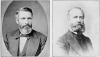
| Hinweise | [Philadelphia and popular Philadelphians (1891) 119]: Portraits von Hugh McCallum und A. J. Sloan |
| Zeit |
Ereignis |
| 1887 |
Nach dem Ausscheiden des Teilhabers Mr. Crease: Umbenennung aus "McCallum, Crease & Sloan" |
| Produkt |
ab |
Bem. |
bis |
Bem. |
Kommentar |
| Teppiche |
1887 |
Umbenennung |
1891 |
[Philadelphia] |
|
| Wandteppiche |
1887 |
Umbenennung |
1891 |
[Philadelphia] |
|
Zeit = 1: Zeitpunkt unbekannt
| ZEIT | 1891 |
| THEMA | Beschreibung |
| TEXT | This establishment is the oldest carpet manufacturing firm in the State of Pennsylvania, and the oldest, excepting one, in the United States. In 1830 William McCallum, Scotchman and practical dyer, who emigrated from Scotland to America a few years before, commenced the manufacture of ingrain carpets on Carpenter street, formerly Trullington's Lane, Germautown. In this building were built and erected the first Jacquard machines made in this country. These machines were made by two Scotchmen, practical ingrain carpet weavers, and were the first two men employed by William McCallum. Previous to their engagement the men had been manufacturing fringe, rugs and mats in a small way on their own account, which business was continued with the manufacture of carpets by William McCallum ; having decided to make the manufacture of carpets his business Mr. McCallum sent for his brother Andrew, who was at that time engaged in the Mississippi trade, and with whom he had arranged to become a partner under the name of "Andrew McCallum & Co." In 1831 the brothers bought the mill and 20 acres of land from James Burk, the then owner. For some time the mill was driven
by a water-wheel. A steam engine and boiler were erected in 1835. In the same year additional weaving room was built and fifty looms added to the former number. Up to 1841 the firm had been manufacturers only. In that year they succeeded to the jobbing business of Hendrickson & Clarkson, at 87 Chestnut street. Mr. Hendrickson becoming a member of the firm. In 1842 a lot of English worsted machinery was imported, a mill in the neighborhood was rented. In 1845 a stone mill for spinning purposes, 50x100 feet, and four stories high, was erected. In 1846 six three-ply ingrain
power looms, built by Alfred Jenks of Bridesburg, were started, being the first power looms put in motion in Pennsylvania. An engine and boilers of 36 horse-power was erected to drive the machinery in this mill. The mills becoming the largest mills in the State, 250 hands being employed. They were situated in a pleasant valley in which there is a well defined echo. This circumstance suggested to the brothers the name of Glen Echo for their mills, by
which they are now known throughout the United States and Europe. The word Glen being used in remembrance of their native Scotland, where the term is common. At first the business of the brothers was necessarily small, employing but 25 to 30 hands. The number increasing with the increasing business. In 1853 the mills were visited by a fire which destroyed the roof and upper floors of the spinning mill, with a large portion of the machinery, including the power looms, the substantial character of the building preventing a much greater loss. The damage to the building was soon repaired, and the destroyed machinery replaced by new. In a few months the business of the mills went on as before. In [855 Andrew McCallum died in the forty-ninth year of his age. By his death the firm was dissolved, and Mr. Hendrickson
retired from the business and William McCallum became sole proprietor. In 1859 Hugh McCallum, Orlando Crease and A. J.
Sloan became members of the firm under the style of McCallum & Co. The breaking out of the war caused great depression in the carpet trade. The firm concluded to erect a number of blanket looms and the necessary machinery for the manufacture of blankets for the government. At the close of the war the firm gave their entire attention to the carpet business. To William McCallum, more than to any one, is due the credit of originating the business, and to his perseverance and good judgment the long continued and successful growth and conduct of the same. In 1866 he retired from active participation and became a special partner, and so continued until his death in 1875, aged 72 years. In 1S67 a further increase was made by the erection of a stone mill 185 x 40 feet, and three stories high, in which 56 additional ingrain power looms were placed, and the worsted machinery doubled, also a steam engine and boilers were erected of 250 horsepower to drive the machinery, the number of hands employed being 350. Up to 1875 the chief product of the mills was ingrain carpets, worsted and worsted yarns. In this year they commenced the manufacture of Wilton and Brussels carpets by power looms. In 1885 four and a half acres of land were purchased at Wayne Junction Station, adjoining the Reading Railroad, on which they built the new Glen Echo Mills, with an entire new plant of improved construction, and one of the best appointed carpet mills in this country. The firm are enabled to manufacture Brussels and Wilton carpets, Bvzautine rugs of a quality not surpassed in design and finish by the best makers either in America or England. In the first part of the year 1887 Mr. Crease retired, and the firm became McCallum & Sloan. The premises first occupied in Philadelphia were at 87 Chestnut street, thence to 509 Chestnut street, and a few years later No. 519 was taken as a retail store. In 1870 the present premises, Nos. 1012 and 1014 Chestnut street were purchased, and where the retail and jobbing business are now continued. The structure is an extensive and handsome marble building, and one of the noted business features of the city. |
| QUELLE | [Philadelphia and popular Philadelphians (1891) 119] |
|