|
|
Metropolitan Street Railway Company
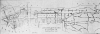
Zum Vergrößern Bild anklicken
| Name | Metropolitan Street Railway Company |
| Ortssitz | New York City |
| Ortsteil | Manhattan |
| Art des Unternehmens | Straßenbahnbetrieb |
| Anmerkungen | Siehe auch gleichnamige Gesellschaft in Kansas City. |
| Quellenangaben | [New York electr. handbook (1904) 125] |
| Hinweise | [New York electr. handbook (1904) 129]: Netz; 133: Unterleitung; 137: Weichen mit Unterleitung |
| Zeit |
Ereignis |
| 1832 |
Bau der "New York & Harlem Railroad Company" als erster Straßenbahn der Welt. Diese Strecke führt vom City Hall Square zum Dorf Harlem über eine Strecke, die später von der Fourth Avenue line des Metropolitan-Systems umfaßt wird, und den Tunnel und Viadukt der späteren "New York Central & Hudson River Railroad Company". Die Strecke wird zunächst mit Pferden betrieben und später über den Harlem River ausgedehnt und mit Dampflokomotiven und Zügen betrieben. |
| 1835 |
Eröffnung der ersten Pferdefuhrwerkslinie auf der Strecke der späteren Third Avenue zwischen der City Hall und Harlem |
| 1852 |
Eröffnung der Pferdebahnlinie der "Sixth Avenue Railroad" mit einer Streckenlänge von 4 Meilen |
| 1853 |
Gründung der "Third Avenue Railroad Company" |
| 1854 |
Beginn der Einstellung des Dampfbetriebs auf der "New York & Harlem Railroad Company", zunächst unterhalb des späteren Madison Square Garden |
| 1854 |
Die "Third Avenue Railroad Company" übernimmt die Pferdefuhrwerkslinie zwischen City Hall und Harlem und fügt vier weitere Meilen hinzu, dicht gefolgt von der "Second Avenue Railroad Company" und der "Eighth Avenue Railroad
Company", jede mit ungefähr der selben Streckenlänge. |
| 1860 |
Es sind 60 Meilen Pferdebahnstrecken auf der Insel Manhattan in Betrieb |
| 1870 |
Einstellung des Dampfbetriebs auf der "New York & Harlem Railroad Company" unterhalb der Grand Central Station |
| 1870 |
Es sind 142 Meilen Pferdebahnstrecken auf der Insel Manhattan in Betrieb |
| 1870-1880 |
Bau der Hochbahnstrecken, die eine ernste Konkurrenz für die Strecken auf der Straßenoberfläche darstellen. |
| 1885 |
Erteilung der Konzession für eine Eisenbahn auf dem Broadway von der Battery zum Central Park. - Diese berühmte Straße wurde bisher nur durch Pferdekutschen bedient, und der Widerstand gegen eine Eisenbahn war sehr groß. Es wurde vorhergesagt, daß zusätzliche Schienenfahrzeuge zum Straßenverkehr die Straße in einem solchen Maße verstopfen würde, daß sie ruiniert würde. Obwohl zu dieser Zeit Kabelbahnen nicht ungewöhnlich sind und die "Third Avenue Railroad Company" ein solches System auf ihren 125th Street und Amsterdam Avenue lines installiert, war der Broadway für Pferdebetrieb gebaut, und ein solcher erwies sich als schnellste Linie in der Stadt und bringt alle Vorhersagen der Gegner durch die Ermgöglichung von Fahrten auf dieser Straße in einer vorher unbekannten Weise durcheinander. |
| um 1885 |
Eine Gruppe von Kapitalisten aus Philadelphia hat den Gedanken, eine Straßenbahngesellschaft in New York zu gründen. Sie kauft zuerst die "Chambers Street & Grand Street Ferry Railroad Company" und später die "Houston, West Street and Pavonia Ferry Railroad Company". Die Zusammenlegung dieser Gesellschaften ist der erste Schritt der Fusion. Starke finanzielle Interessen aus New York fließen in das Syndicat ein, umfangreiche Pläne werden aufgestellt und in schneller Folge werden die Broadway und Seventh Avenue. Sixth Avenue, Ninth Avenue und 23rd Street roads gepachtet und dem System hinzugefügt. - Bis 1900 werden alle rivalisierenden und unabhängigen Besitztümer auf der Insel Manhattan durch Kauf oder Pacht erworben. |
| Sept. 1892 |
Ein Teil der "Union Railway", eine unabhängige Gesellschaft, wird im September als erste Bahn mit Oberleitung in New York ausgerüstet. Doch New York will den aus ästhetischen und praktischen Gründen den Oberleitungsbetieb verhindern. Philadelphia, Washington, Chicago, San Francisco und andere Städte sind mit Kabelbahnen erfolgreich, und in der Third Avenue ist das System bereits in New York in Betrieb; und für die Broadway line, auf der sich ein enormer Verkehr über den ganzen Tag entwickelt hat, erscheint der Kabelbetrieb die beste Betiebskraft und wird demgemäß angewendet, |
| Juli 1893 |
Eröffnung der Kabelbahnlinie von Battery zum Central Park ist von so viel Erfolg begleitet, daß sofort Pläne für Erweiterungen nach Harlem auf der anderen Seite des Central Park, durch die Columbus and Lexington Avenues gemacht werden. |
| Anfang 1894 |
Die Gesellschaft entschließt sich zu einem elektrischen System mit Unterleitung in einem Schlitzkanal, ähnlich der in Budapest gewählten Lösung. Die Strecke in der Lenox Avenue in Harlem, drei Meilen lang, geplant als Fortsetzung von neuen Kabelstrecken auf der anderen Seite des Central Park, wird für das Experiment, das auf den vorsichtigsten Strecken durchgeführt wird. Um die Mißerfolgsaussichten auf ein Minimum zu reduzieren, wird die Strecke auch für eine Kabelbahn geplant, so daß sich für den Fall, daß sich die elektrische Bahn als unbefriedigend herausstellt, ein Seil ersetzt werden kann. |
| 1895 |
Der Betrieb mit unterirdischer Stromzuführung wird in Manhattan eingeführt |
| Juli 1895 |
Die elektrisch betriebene Strecke mit Unterleitung in einem Schlitzkanal in der Lenox Avenue in Harlem zur anderen Seite des Central Park wird in Betrieb genommen. Ihr Betrieb erweist sich als effizient, zuverlässig und wirtschaftlich (Ersparnis: 5 ct. je Wagen-Meile), und es wird beschlossen, das elektrische Stromabnehmersystem nicht nur für die neuen Strecken, sondern auch für die bestehenden Kabelbahnen einzuführen. |
| 1897 |
Es werden 28 Meilen Gleis mit unterirdischer Stromzuführung gebaut |
| 1897 |
Beginn der Fundamentierungsarbeiten für das Kraftwerk in der 96th Street |
| 1898 |
Es werden 62 Meilen Gleis mit unterirdischer Stromzuführung gebaut |
| 1899 |
Es werden 44 Meilen Gleis mit unterirdischer Stromzuführung gebaut |
| Aug. 1899 |
Die Linie in den 28th and 20th Streets wird für einen Versuch mit Druckluftbetrieb ausgewählt. Hierzu wird eine Kompressorenstation mit einem vierstufigen, direkt getriebenen Kompressor (1000 PS, p= 2.400 psi = 168 at) gebaut. |
| 08.1899 |
Die erste Maschine im Kraftwerk in der 96th Street geht in Betrieb |
| 1900 |
Letzter Schritt bei der Zusammenlegung ist es, den letzten verbleibenden Konkurrenten, die "Third Avenue Railroad Company" mit 71 Meilen Streckenkilometern in der Gemeinde Manhattan und 135 Meilen nördlich des Harlem River, zusammen mit ungebauten Konzessionen großen Umfangs und Werts, zu übernehmen. |
| 1900 |
Es werden 4 Meilen Gleis mit unterirdischer Stromzuführung gebaut |
| Aug. 1900 |
Versuch mit Chlorid-Akkumulatorenbetrieb. Am Fuß der West 42nd Street wird für den Betrieb auf der 34th Street-Linie eine große Batteriestation für 50 Wagen angelegt. Der Betrieb läuft ohne ernsthafte Schwierigkeiten oder Unterbrechungen. Fehler sind häufig, Unannehmlichkeiten durch die ausgasenden Batterien und die Betriebskosten sind hoch. |
| 1901 |
Es werden 33 Meilen Gleis mit unterirdischer Stromzuführung gebaut |
| April 1901 |
Der Versuch mit Druckluftbetrieb auf der Linie in den 28th and 20th Streets wird nach zwei Jahren nach Fehlern, Unfällen und Unregelmäßigkeiten im Betrieb und allgemeiner Unzufriedenheit bei der Öffentlichkeit und den kommunalen Behörden eingestellt, und der Pferdebahnbetrieb wird eingeführt. |
| 1902 |
Es werden 14 Meilen Gleis mit unterirdischer Stromzuführung gebaut |
| 1903 |
Es werden 15 Meilen Gleis mit unterirdischer Stromzuführung gebaut |
| Sept. 1903 |
Einstellung des Versuchs mit Chlorid-Akkumulatorenbetrieb auf der 34th Street-Linie nach häufigen Fehlern, Unannehmlichkeiten durch ausgasende Batterien und hohe Betriebskosten. Die Strecke wird auf Betrieb mit unterirdischer Stromzuführung umgestellt, und der Verkehr steigt in einem solchen Maße, daß sich die Verbesserung rechtfertigt. |
| Produkt |
ab |
Bem. |
bis |
Bem. |
Kommentar |
| Pferdebahnbetrieb |
1832 |
als New York & Harlem RR |
|
|
|
| Straßenbahnbetrieb |
1895 |
Beginn (Unterleitung) |
1904 |
in Betrieb |
|
Zeit = 1: Zeitpunkt unbekannt
| ZEIT | 1832-1904 |
| THEMA | Geschichte |
| TEXT | The Metropolitan system is the result of successive leases, mergers and amalgamations of over forty independent companies, organized under a great variety of charters, scarcely any two of which are similar in their provisions. A brief history of the inception and growth of the street railway enterprises now vested in the New York City Railway Company is worthy of passing notice. It commences in 1832 with the building by the New York & Harlem Railroad Company of the first street railway line in the world. This line extended from City Hall Square to the village of Harlem over a route which is now embraced in the Fourth Avenue line of the Metropolitan system and the present tunnel and viaduct of the New York Central & Hudson River Railroad Company. This line, which at first was operated by horses, was later extended across the Harlem River and the horse cars replaced by steam locomotives and trains. The growth of the city in later years caused successive withdrawals of steam service, first, in 1854, below what is now Madison Square Garden, and, again in 1870, below the Grand Central Station. In 1835 the first stage line for local travel was opened over the route of the present Third Avenue line between the City Hall and Harlem, but it was not until 1852 that there was any addition to the street railway mileage. With the opening in that year of the
Sixth Avenue Railroad, with four miles of line, development became active, and in 1854 the Third Avenue Railroad Company, organized a year previous to take over the stage line operating on that thoroughfare, added four miles more, closely followed by the Second Avenue Railroad Company and the Eighth Avenue Railroad Company, each with about the same mileage. By i860 there were sixty miles of horse car lines in operation on the Island of Manhattan, and by 1870 this had increased to 142 miles.
Between 1870 and 18X0 the elevated railroads were constructed and opened, making serious inroads on the traffic of the surface lines - so much so that many of the owners of the latter feared they would never again pay operating expenses. In 1885 a franchise was granted for a railroad on Broadway from the Battery to Central Park. This famous street had up to that time been served only by stage lines and the opposition to the construction of a railroad was very great, predictions being freely made that the addition of cars to the vehicle traffic would congest the street to such an extent that it would be ruined. Although at that time cable railways were not uncommon and the Third Avenue Railroad Company was installing such a system on its 125th Street and Amsterdam Avenue lines, the Broadway
road was built for horse operation, and as such proved the fastest line in the city and upset all the predictions
of its opponents by facilitating travel on that street in a manner unknown theretofore.
About this time a group of Philadelphia capitalists conceived the idea of acquiring and consolidating the street railways of New York. They acquired first the Chambers Street & Grand Street Ferry Railroad Company and later the Houston, West Street and Pavonia Ferry Railroad Company, the consolidation of these two lines being the first step in the merger. Strong financial interests from New York entered the syndicate, comprehensive plans were made and in rapid succession the Broadway and Seventh Avenue. Sixth Avenue, Ninth Avenue and 23rd Street roads were leased and added to the system. From that time to 1900 all the competing and independent properties on the island of Manhattan
were one by one acquired by purchase or lease. In that year the last step in the consolidation was taken in the
bringing into the sytem of the Metropolitan Company's only surviving competitor, the Third Avenue Railroad Company, with seventy-one miles of track in the Borough of Manhattan and one hundred and thirty-five miles north of the Harlem River, together with unconstructed franchises of great extent and value.
The final organization of the several corporations through which the properties are now controlled is a little complex. It suffices to say that the Metropolitan Securities Company is the controlling organization and that the New York City Railway Company is the operating company south, and the Union Railway Company north, of the Harlem River. The organization of the New York City Railway Company for operating purposes is shown in the accompanying chart. The Union Railway Company has its own executive and operating organization and the officers of the New York City Railway Company take no part in its management.
In the matter that follows, the Union Railway Company should not be understood to be included unless specifically so stated, as the space allotted to this article will not permit a description of its system which presents no features differing greatly from those of many other overhead trolley roads in the United States. |
| QUELLE | [New York electr. handbook (1904) 126] |
| |
| ZEIT | 1890-1904 |
| THEMA | Einführung der maschinellen Traktion |
| TEXT | The earliest plans of the syndicate for the consolidation of the New York roads contemplated the application of an improved motive power to the entire system. The overhead trolley was coming rapidly into use as the most approved form of surface traction, and had been adopted by the West End Street Railway Company of Boston for its entire system of 250 miles of track - at that time the largest city railway system in the world. In September, 1892. a portion of the Union Railway (then an independent road) was equipped with the overhead trolley - the first electric railway mileage in the City of New York. But New York was at that time extensively engaged in burying overhead wires of all kinds and, for the Island of Manhattan, at least, the opposition to the overhead trolley, both for aesthetic and practical reasons, was so great as to be prohibitive. Philadelphia, Washington, Chicago, San Francisco and other cities had the cable in successful operation - in fact, it was already in use on the Third Avenue system in New York; and for the Broadway line, which had developed what was then an enormous traffic, continuous throughout the day, with a short, practically straight run, it seemed the best power available and was duly adopted. The opening of the line from the Battery to Central Park in July, 1893, was attended with such success that plans were immediately made for extensions to Harlem on either side of Central Park, through Columbus and Lexington Avenues. The cable system was, however, so enormously expensive both to construct and operate, and was capable of so little flexibility, that it was recognized from the first that its application must be confined to lines of the first importance, and that a more flexible and economical system must be found. The Company's engineers were sent to Budapest, Hungary. and other European cities to study the latest development, and a reward of $50,000 was offered for the submission of a practical system of motive power equal or superior to the overhead trolley. Nothing practical resulted from this offer, and early in 1894 the Company proceeded to adapt to its uses a conduit system
similar to that which liad been in use in Budapest for several years. The Lenox Avenue line in Harlem, three miles in length, designed as a continuation of the new cable lines on either side of Central Park, was selected for the experiment, which was conducted on the most conservative lines. In order to reduce to a minimum the chances of failure, the construction was planned as for a cable road so that, should the electric system prove unsatisfactory, the cable could be substituted. In July, 1895, the road was opened for service and proved so efficient, reliable and economical in operation that the extension of the electric conduit system was decided on, not only for all new lines, but for the ultimate displacement of the cable, over which it showed an economy in operation of at least five cents per car mile.
The problem of providing a system as low in cost of construction as the overhead trolley, and which could be
applied with profit to all the many miles of horse car lines, had not yet been solved, and experimental work costing large amounts continued to be made for several years. A surface contact system was tried and found wanting. Compressed air seemed to offer greater possibilities than any other self-contained motor, and after several preliminary trials the 28th and 20th Streets line was selected for a test of that power, and, in August, 1899, was completely equipped and opened for operation. A large compressing and storage plant with a 1.000-H.P. direct-driven, four-stage compressor, capable of compressing to 2,400 pounds to the square inch, and with a capacity of eighty cars, was built. The results extending over nearly two years and under close observation were very unsatisfactory, and in April, 1901, following a succession of failures, accidents, irregularities in service and general dissatisfaction on the part of the public and the city authorities, the air car service was withdrawn and horses restored.
An experimental trial quite as thorough and extensive, and more satisfactory in result was made of the chloride storage battery. In August, 1900, a large battery station with a capacity of fifty cars was established at the foot of West 42nd Street for the operation of the 34th Street line, and from that time until September, 1903, the line was operated by the storage battery cars without serious trouble or interruption. Failures were frequent, however, discomfort was occasioned by the fuming of the batteries, and the cost of operation was very high, so that, during the summer of 1903, the conduit construction was installed, the traffic of the line having increased to such an extent as to warrant the improvement. |
| QUELLE | [New York electr. handbook (1904) 128] |
| |
| ZEIT | 1890-1904 |
| THEMA | Gleisanlage |
| TEXT | As stated above, the installation of the conduit system on Manhattan Island was begun in 1895. Additions have been made to the mileage so constructed each year, until at the present time there are two hundred miles of track so equipped.
The system is known as a double conductor system with metallic return circuit, and no use is made of the tram rails for returning current to the power stations, and was adopted in practically its present form, no changes worthy of note having been found desirable beyond the strengthening of all the component parts of the plow.
This form of construction has both advantages and disadvantages, as compared with the overhead trolley system. All the construction being underground, the feeder wires and electric conductors are protected from damage by wind and weather, and the expense of maintenance of the electric conductors is somewhat reduced as compared with the overhead trolley system. On the other hand, the cleaning of dirt from the conduits and the manholes is an added expense, while the presence of the centre slot complicates the construction of special track work and increases the expense of its installation and maintenance.
The absence of poles and overhead wires, always more or less unsightly. is a distinct advantage from an aesthetic point of view, while possible danger to the public from falling wires is avoided.
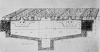
Proper drainage of the conduit and manholes is obtained by connecting each manhole with the street sewer by a six-inch pipe. These manholes being only about one hundred feet apart, this provision easily takes care of the surface water which may find its way into the conduit through the slot. Reference to the cuts gives a fair idea of the arrangement of the conduits and their position with reference to the surface of the street.
The conduits are cleaned by drawing through them a scraper, which conforms to the cross-section of the conduit, and which is carried by a car running on the track above. This scrapes such dirt as may have fallen through the slot along the conduit, depositing it in the handholes and manholes, from which it is afterwards removed by the cleaning gang and taken to the city dumping places.
There are at present about 160 men engaged solely in this work of keeping the underground construction free from dirt. Such cleaning of the conduit costs about 500 a year per mile of conduit. At certain places on several of the lines the level of the conduit is so low that at extreme high tide the conductor bars are covered with water and the operation of the cars over that part of the line is necessarily suspended until the water level recedes. This sometimes happens during very heavy rains, when the city sewers in certain locations are not sufficient to take the surface water away from the streets as fast as it falls. This occurs perhaps once or twice a year.
Considerable trouble has been experienced during severe winters, like the last, because ice and snow collects in the conduit and manholes and in handholes around the insulators. This trouble is especially severe when the snow and ice is frozen in the handholes, and manifests itself in broken rail brackets, grounded insulators and a variety of other ways.
The Company's facilities and the construction of the conduit are such that any ordinary snow fall up to ten or twelve inches in depth can be easily handled, and experience shows that the conduit system is fully as reliable in its operation as the overhead system.
The pavement used in the Borough of Manhattan in connection with the reconstruction of the electric lines is largely asphalt. Some granite block pavement is in use. and a little wooden block pavement. From the standpoint of the operating Company, the granite block or the wooden block pavement is to be preferred to asphalt, as either of these pavements can be more easily maintained in good condition along and between the rails than can the asphalt, which quickly cuts out leaving the street surface in a very undesirable condition.
The construction of this style of conduit trolley road in New York City streets is quite difficult, for many reasons.
In the first place, the volume of street traffic on nearly all the lines which have been constructed is large, especially in the lower parts of the city, and. in addition to provision for maintaining the operation of the horse cars until the electric cars are readv for business, arrangements must be made for the continuance at all times of the ordinary street traffic.
Furthermore, in any street in New York, the surface having been removed, one encounters divers obstacles in
the shape of gas pipes, water pipes and electric conductors, laced and interlaced, over the entire street, and so
near the surface that a rearrangement of many, if not all, of these structures is necessary in order that a free
passage for the conduit construction may be provided.
The cost of construction of conduit roads, as compared with the track and special work required with overhead trolley lines, is very much in favor of the latter. In fact, the average cost of conduit construction per mile of single track in New York City is somewhat above 100,000 per mile ; while the cost of special work at intersections, etc., is probably three times what it would be for use with the overhead trolley. The reason for this is found in the slotted construction necessary to provide access to the conduit. The life and the expense of maintenance of the straight track conduit construction does not appreciably differ from that of the overhead trolley construction, but the life of the special work does not average on the system of the New York City Railway Company more than five or six years, and the depreciation charged to maintenance is correspondingly high.
In general, the methods pursued in the conversion of the horsecar lines to electric lines have been, first, to provide for the continuance of the operation of the horsecars during the electric construction, either by laying a side track along the whole length of the line to be constructed, and operating the horsecars on this side track and on one of the main tracks while the other main track is being built, or else to remove the horse cars entirely to a line in some parallel street while the work of reconstruction is going on.
The necessary excavation is then made as deep as is required for the yokes and conduit of the new construction. This exposes such water pipes, gas pipes, electric conductors, etc., as may interfere with construction. Such pipes are then moved to positions where they will not interefere with the construction.
Then the iron yokes, steel rails, etc., used in the construction are put in place and bolted up and the track
lined and levelled and temporarily supported, while Portland cement concrete is rammed beneath and around the
yokes supporting them and forming the conduit, which later will contain the electric conductors. At the same time, the terra cotta ducts for containing the electric cables are put in place, and lastly the pavement - asphalt
or granite blocks - is put in place and the construction is ready for the electric conductors, the installation of
which is the last phase of the construction.
The conversion of the cable lines to electric lines was done in substantially this manner, except that it was necessary to keep the cable cars in continuous operation while the change was being made. This was done in such a manner that when the time came for the final change from cable power to electric power, the operation of the Broadway line was discontinued at nine o'clock on Saturday night, and on Sunday afternoon at five o'clock the operation of electric cars was begun. The same method was pursued on the other cable lines as upon the Broadway line.
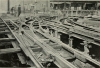
The amount of special track work at intersection of lines and crossovers, etc.. in the City of New York is excessive, as compared with the number of miles of straight track. There are now in operation about twelve
hundred switches on two hundred miles of straight track. These switches are arranged to be thrown either by switchmen employed for that purpose or by motormen or conductors on the cars. |
| QUELLE | [New York electr. handbook (1904) 131] |
| |
| ZEIT | 1904 |
| THEMA | Allgemeines |
| TEXT | The Metropolitan Street Railway system embraces all the street surface railway lines of the Boroughs of Manhattan and the Bronx. Its lines in the Bronx also extend widely into the adjoining county of Westchester, its northerly
termini in the villages of Tarrytown, White Plains and Mamaroneck being distant about thirty-three miles from
the southern extremity of the system at the Battery. Within these limits, with about 500 miles of track, it serves a resident population of nearly two and one-half millions, of which all but about four hundred thousand are south of the Harlem River. It traverses the most densely populated districts in the world and its traffic and earnings exceed those of any other street railway. The system is separated into two general divisions by the Harlem River, the lines north of the river being operated independently of those in the Borough of Manhattan. These two divisions differ radically in characteristics. The system in Manhattan is essentially and completely urban, with dense traffic on nearly every line. Its electric construction is all of the conduit type, substantial and costly in the extreme. In the territory of the Union Railway Company (the company which operates the lines north of the Harlem River) totally
different conditions prevail. Its lines extend from termini in the Borough of Manhattan across the Harlem River bridges into sparsely populated districts of the Bronx and Westchester county, and its traffic is largely suburban. It is operated exclusively by the overhead trolley and many of its outlying and unimportant lines are still single track. |
| QUELLE | [New York electr. handbook (1904) 125] |
|