|
|
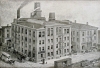
John Wyeth & Bro.
Zum Vergrößern Bild anklicken
| Name | John Wyeth & Bro. |
| Ortssitz | Philadelphia (Penns.) |
| Straße | Walnut Street 1412-1414 |
| Art des Unternehmens | chemisch-pharmazeutische Fabrik |
| Anmerkungen | Lage: 1412-1414 Walnut Street und Brighton Street. Ab 1885: 11th Street und Washington Avenue (Südwest-Ecke). Eigentümer (1889): John Wyeth, Frank H. Wyeth & E. T. Dobbins; um 1893: "John Wyeth & Bro.". Adresse um 1884: 1412-1414 Walnut Street und Brighton Street; um 1889/91: South Eleventh Street und Washington Avenue (Südwest-Ecke). Herstellung von pharmazeutischen Produkten. |
| Quellenangaben | [Hexamer General Surveys, Plates 1871+2316+2661 (1884+1889+1893)] [Philadelphia and popular Philadelphians (1891) 163] |
| Hinweise | [Philadelphia and popular Philadelphians (1891) 163]: Werksansicht |
| Zeit |
Ereignis |
| 1861 |
Gründung |
| 1880 |
Völliger Umbau der Gebäude an der Walnut / Brighton Street |
| 1885 |
Neu erbaut an der S. Eleventh Street und Washington Avenue |
| 1889 |
Erweitert |
| Frühj. 1889 |
Das Werk an der Walnut Street wird durch Feuer zerstört |
| 1893 |
Erweitert |
| Produkt |
ab |
Bem. |
bis |
Bem. |
Kommentar |
| Arzneimittel |
1884 |
[Hexamer] |
1893 |
[Hexamer] |
|
| Chemikalien |
1884 |
[Hexamer] |
1893 |
[Hexamer] |
|
| Zeit |
Objekt |
Anz. |
Betriebsteil |
Hersteller |
Kennwert |
Wert |
[...] |
Beschreibung |
Verwendung |
| 1884 |
Dampfkessel |
2 |
|
unbekannt |
|
|
|
|
|
| 1889 |
Dampfkessel |
2 |
|
unbekannt |
|
|
|
|
|
| 1893 |
Dampfkessel |
2 |
|
unbekannt |
|
|
|
|
|
| Zeit |
gesamt |
Arbeiter |
Angest. |
Lehrl. |
männl. |
weibl. |
Kommentar |
| 1884 |
79 |
|
|
|
|
|
40 Männer, 3-4 Jungen, 35 Mädchen) |
| 1889 |
200 |
|
|
|
|
|
|
| ZEIT | 1891 |
| THEMA | Beschreibung |
| TEXT | The laboratories of Messrs. John Wyeth & Brother, Eleventh street and Washington avenue, are among the most noteworthy of our manufacturing interests in the southeastern section of the city. Their name and the products of their establishment are as well known in the principal cities and towns of Europe, South America, Australia, East and West Indies, China and Japan, as to every medical man and drug house in the United States. In the spring of 1889 their entire plant mi Walnut street above Broad was destroyed by fire, involving the loss of over half a million of dollars. They at once leased extensive quarters, and almost immediately were able to supply a number of their most important preparations. Fortunately, all the prominent wholesale druggists throughout the country had large supplies of their products from which they could draw to meet pressing demands, so that their business was thus carried on with but slight interruption and little intermission. As soon as practicable they purchased their present site, and, after extensive alterations, in the following December occupied one of the most complete, substantial and perfectly appointed establishments in the world, replete with every convenience and mechanical appliances to facilitate their operations.
Our representation of the buildings hardly conveys an accurate idea of the magnitude of this plant, having 350.000 feet of floor space in actual use. The firm employs over four hundred hands, about three hundred females and one hundred males. Their preparations are recognized and endorsed by the medical profession in all civilized countries, as well as by almost all State and National Pharmaceutical Associations, and to them is largely due the introduction of the present mode of administering our most potent and nauseous remedies. With this house is identified more closely than with any other the inauguration of what is aptly termed "Elegant Pharmacy;" and the bringing to the notice of the profession the new remedies which have recently nearly revolutionized the practice of medicine, they originating many important combinations, which are now being largcly used throughout the world. The products of this house are exclusively of legitimate and standard medicinal preparations, their several departments, all separate and distinct, comprise the manufacture of fluid extracts, medicinal elixirs, wines, syrups, etc.; pepsin, pancreatin and food products, extract of malt. One of the most important branches of their business is the manufacture of compressed tablets, pills, lozenges, etc., and the phenomenal favor with which they have been received is the best evidence of their value, the output of these averaging over 1.000.000 tablets per day. The machinery employed in this industry is of their own invention and construction. It rivals, if not surpasses, in delicacy, finish and minute accuracy, that designed and used in the United States Mint. Much prominence has lately been given to these tablets through Henry M. Stanley, the African explorer, whose entire medical outfit was composed of them. They are also very largely employed by the United States Army and Navy Medical Department; in fact, they have almost superseded every other form of manufactured pills. It is rarely a house makes such rapid strides in popular favor and wins the reputation that has attended their efforts; established in 1861, in 1891 - just thirty years of a business career - it stands in
the lead of our manufacturing chemists, its growth and magnitude one of the marvels of our city. |
| QUELLE | [Philadelphia and popular Philadelphians (1891) 163] |
|