|
|
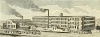
Schaum & Uhlinger
Zum Vergrößern Bild anklicken
| Name | Schaum & Uhlinger |
| Ortssitz | Philadelphia (Penns.) |
| Straße | North 2nd Street |
| Art des Unternehmens | Textilmaschinenfabrik |
| Anmerkungen | Lage: N. 2nd Street, Glenwood Avenue und Pennsylvania Railroad. 1891: "Fletcher Works - Schaum & Uhlinger". |
| Quellenangaben | [Hexamer General Surveys, Plate 2327 (1890)] [Philadelphia and popular Philadelphians (1891) 108] |
| Hinweise | [Philadelphia and popular Philadelphians (1891) 108]: Werksabbildung |
| Zeit |
Ereignis |
| 1889 |
Die Herren Schaum & Uhlinger kaufen die gesamte Fabrik, und die neuen Fletcher Works werden erbaut |
| Produkt |
ab |
Bem. |
bis |
Bem. |
Kommentar |
| Textilmaschinen |
1890 |
[Hexamer] |
1890 |
[Hexamer] |
|
| Zeit |
Objekt |
Anz. |
Betriebsteil |
Hersteller |
Kennwert |
Wert |
[...] |
Beschreibung |
Verwendung |
| 1890 |
Dampfkessel |
1 |
|
unbekannt |
|
|
|
|
|
| Zeit |
gesamt |
Arbeiter |
Angest. |
Lehrl. |
männl. |
weibl. |
Kommentar |
| 1890 |
160 |
|
|
|
|
|
|
| ZEIT | 1891 |
| THEMA | Beschreibung |
| TEXT | Since the invention of the fly shuttle by John Kay, in 1733, numerous and important improvements in the art of weaving were discovered and utilized until 1804, when Joseph Marie Jacquard, of Lyons, France, invented and perfected the machine which bears his name, and which has revolutionized the manufacture of textile fabrics in every part of the world, save, perhaps, some of the native tribes of India, where the primitive hand loom is still in vogue. Supplementing the power loom, invented in the latter part of the eighteenth century by Dr. Edmund Cartwright, an eminent English divine of the Established Church, the Jacquard loom was of such paramount importance, that the distinguished inventor, before his death in 1834, saw his loom in almost universal use. The grandfather of Mr. William W. Uhlinger, a native of Switzerland, was for years employed in Jacquard's factory at Lyons, afterward established a factory in Switzerland, with his son, W. P. Uhlinger, who subsequently emigrating to Philadelphia, began the manufacture of looms, and founded the present business in 1850. To give such of our readers as may not be familiar with the art of weaving, an intelligent idea of the immense value of the Jacquard machine, it is but proper to state here that every piece of figured goods, no matter where and how made, is woven by the aid of a Jacquard machine, without which all fabrics would have to be confined to plain weaves, such as plaids, checks, stripes, etc., etc. Previous to the invention of this machine the work was done by a number of boys, who each pulled a series of cords according to a set pattern. This of course was so laborious and costly, that it is very easy to perceive at once what an indispensable thing a Jacquard machine is at the present day, enabling us to enjoy the finest designed goods and elegant color effects at a cost which would not have been dreamed of one hundred years ago. In July, 1889, Messrs. Schaum & Uhlinger purchased the entire plant, goodwill and fixtures of W. P. Uhlinger, and in the same year the new Fletcher Works were built, named so in honor of Mr. George A. Fletcher, the special partner of the firm. These extensive works are now fully occupied by them, and in it they are successfully conducting the leading industry of the kind in the United States. The operations of the old concern were at first confined to the manufacture of Jacquard machines, and the business was comparatively limited, these looms at that time being in use only in limited quantities; but recent improvements made in silk, woolen and cotton looms have made the use of Jacquard's invention almost universal in fancy weaving, and thereby extended the operations of the firm to such an extent as to make them practically without competition in the United States. For their important work Messrs. Schaum & Uhlinger occupy their immense building at
North Penn Junction, on the New York Division of the Pennsylvania Railroad, with a frontage of 300 feet on Glenwood avenue, and a depth of 90 feet on Second street, and have just completed a large new foundry adjoining the main building, with an area of 80 by 100 feet; also extensive lumber sheds, in which is stored an immense quantity of seasoned lumber for manufacturing purposes. These, with the engine and boiler houses, blacksmith shops and stables adjoining, constitute the largest and most valuable plant for the manufacture of this machinery in the country. This complete plant represents an outlay of $275.000, and makes this concern one of the leading contributors to the large aggregate of the home and export trade of the United States. The power is transmitted to all parts of this vast establishment by a series of ropes, a system recently perfected and put in by Mr. George V. Cresson, of this city. The output of these works comprise plain and fancy looms for silk, cotton and woolen goods, ribbon, tape and webbing looms, Jacquards, dobbies, witches, centrifugal-hydro-extractors, card stamping and repeating machines, &c. The firm are the pioneers in the art of swivel weaving, having perfected and brought out the first power swivel loom for broad goods in the world, and are at present sending these looms to foreign countries in large quantities in addition to their immense home trade. Among their shipments may be mentioned some to Germany, France, Italy, England, also Egypt, Japan and other foreign countries, with an increasing South American trade. A special feature of the firm is their looms for the
weaving of silks and ribbons. In the success of this comparatively new, but already important industry of the United
States, this firm have been important factors. This successful representative firm is composed of Messrs. Otto W. Schaum, William H. Rometsch, and William W. Uhlinger, general partners, and Mr. George A. Fletcher, special partner. Mr. Schaum is a practical expert machinist, and has been engaged in and about the manufacture of looms since he was sixteen years of age. Mr. William H. Rometsch commenced the manufacture of looms under the instruction of his father, who began the business in New York in 1S65, and after years of practical experience, came to Philadelphia, and subsequently became a member of this firm. Combining thus familiarity with every detail of their difficult and important work, with executive ability of a high order, it is not to be wondered at that the success of Messrs. Schaum & Uhlinger should be co-extensive with the wonderful growth of the manufacture of textile fabrics in the United States, and that in this house the operators of the cotton, woolen and silk mills of the country should find such an auxiliary as enables them to compete in all branches of the weaving art with those of every nation on the globe; the improvement in machinery and devices offsetting cheap labor. |
| QUELLE | [Philadelphia and popular Philadelphians (1891) 108] |
|