|
|
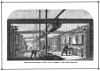
Franklin Sugar Refinery, Harrison, Havemeyer & Co.
Zum Vergrößern Bild anklicken
| Name | Franklin Sugar Refinery, Harrison, Havemeyer & Co. |
| Ortssitz | Philadelphia (Penns.) |
| Straße | Delaware Avenue |
| Art des Unternehmens | Zuckerraffinerie |
| Anmerkungen | Lage: Delaware Avenue, Bainbridge Street, Swanson Street, Front Street und Almond Street (Südwest-Ecke; Delaware River). Betriebsleiter: Alfred Harrison. Inhaber (um 1875): "Harrison, Havemeyer & Co."; um 1886: "Harrison, Frazier & Co.". Herstellung von weißem bzw. gelbem Zucker im östlichen bzw. westlichen Werk. Keine Angaben zu den Dampfmaschinen. 1875: 16 Zentrifugen (nur im Ost-Werk) und jede der beiden Fabriken mit 750 PS Dampfkesselleistung. 1886: 66 Zentrifugen (Dampfkraft nicht genannt). |
| Quellenangaben | [Hexamer General Surveys, Plates 382+956+1639-1640+2035-2036+2952-2953 (1869+1875+1882+1886+1896)] [Philadelphia and popular Philadelphians (1891) 188] |
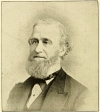
| Hinweise | [Philadelphia and popular Philadelphians (1891) 188]: Portrait George L. Harrison |
| Zeit |
Ereignis |
| 1811 |
Geburt von George L. Harrison |
| 1849 |
George L. Harrison wird Teilhaber mit Powers & Weightman in der neuen chemischen Fabrik an den Fall s of Schuylkill. - Ein paar Jahre später steigt er in das Zuckerraffinerie-Geschäft ein |
| 1862 |
Bau des Maschinenhauses und des Brecher- und Zentrifugenhauses Ecke Bainbridge Street / Delaware Avenue |
| 1863 |
Gründung durch George L. Harrison. Er kauft die alte Zuckerraffinerie an der Vine Street unterhalb der Third Street |
| 1866 |
Bau der Fabrik östlich der Swanson Street |
| 1872 |
Bau der Fabrik westlich der Swanson Street (Retorten-, Filter- und Siedehaus) 1871 |
| 1880 |
Bau des Kesselhauses in der östlichen Fabrik 1879 |
| 1881 |
Bau des großen Gebäudes östlich der Swanson Street |
| 1883 |
Erhöhung des Retortenhauses an der Bainbridge Street 1882 |
| 1883 |
Neubau des Siedehauses zwischen Bainbridge und Almond Street |
| 1883 |
Bau des Lagerhauses zwischen Penn und Front Street |
| 1883 |
Umbau der Filterhäuser südlich an der Almond Street |
| 1885 |
Bau des Kesselhauses Ecke Almond Street / Delaware Avenue |
| 1886 |
Erweiterung des Filterhauses |
| 1889 |
Umbau des 1871/72 errichteten alten Filter- und Siedehauses |
| 1889 |
Umfirmierung in "Franklin Sugar Refining Company" |
| 1890 |
Erhöhrung des Filterhauses |
| 1894 |
Bau des Rohzuckerlagerhauses |
| 1895 |
Bau des Lagerhauses für Raffinade |
| Produkt |
ab |
Bem. |
bis |
Bem. |
Kommentar |
| raffinierter Zucker |
1863 |
Beginn |
1896 |
[Hexamer] |
|
| Zeit |
Objekt |
Anz. |
Betriebsteil |
Hersteller |
Kennwert |
Wert |
[...] |
Beschreibung |
Verwendung |
| 1869 |
Dampfkessel |
8 |
|
unbekannt |
|
|
|
|
|
| 1875 |
Dampfpumpen |
2 |
|
Charles B. Hardick, Niagara Steam Pump Works |
|
|
|
|
|
| 1875 |
Dampfkessel |
8 |
|
unbekannt |
|
|
|
|
|
| 1875 |
Dampfpumpen |
3 |
|
unbekannt |
|
|
|
|
|
| 1886 |
Dampfkessel |
27 |
|
unbekannt |
|
|
|
|
|
| 1896 |
Dampfkessel |
32 |
|
unbekannt |
|
|
|
|
|
| Zeit |
gesamt |
Arbeiter |
Angest. |
Lehrl. |
männl. |
weibl. |
Kommentar |
| 1875 |
300 |
|
|
|
|
|
200 Arbeiter im östlichen, 100 im westlichen Werk, alles Männer |
| 1886 |
800 |
|
|
|
|
|
|
| 1896 |
1000 |
|
|
|
|
|
|
| ZEIT | 1891 |
| THEMA | Beschreibung |
| TEXT | The business to which this company has succeeded was established in 1863 by the late George L. Harrison. Mr. Harrison was born in 1811, and was the son of John Harrison, the founder of the chemical works now conducted by his grandsons under the style of Harrison Brothers Company. Mr. George L. Harrison finished his education at Harvard College, and having read law in the office of Joseph R. Ingersoll was admitted to the Bar. But just then his father died, and this bereavement changed his plan of life. He abandoned the profession of his choice to aid his brothers in the management of his father's chemical works, then located in the old district of Kensington. In 1849 he entered into partnership with Powers & Weightnian in the new chemical enterprise commenced by them at the Falls of Schuylkill. A few years afterwards he embarked in the business of sugar refining, and in 1863 bought the old sugar refinery on Vine street, below Third street, in which the "Franklin" then took its origin. The business, small in its beginning, under his able management and with his energy and enterprise prospered and expanded into the large establishment now on the banks of
the Delaware, known everywhere for the completeness of its plant and the excellence of its product. He was identified
with the "Franklin" until his death. Notwithstanding the absorbing nature of his business, Mr. Harrison devoted much time to literary and philosophical pursuits. In the church of which he was a member he was held in high esteem for the wisdom of his counsel, the zeal and generosity with which he furthered its educational and charitable work. For twenty years he was treasurer of the Episcopal Hospital. For some time he was an active manager of the House of Refuge, an inspector of the penitentiary, and a member of the Board of City Trusts. He was a leading member of the Board of Public Charities from its creation until 1875, when failing health obliged him to resign. His admirable reports while president of that board attracted much attention among those engaged in the management of penal and reformatory institutions, and his keen and intelligent inspection of the poorhouses and prisons of the State caused the reform of many abuses in their management. Mr. Harrison was the author of the legislation which led to the creation of the Committee on Lunacy, which has accomplished so much for the amelioration of the condition of the insane. His energy and means were generously devoted to the accomplishment of this object, which had always been a cherished purpose with him, but the condition of his health prevented his acceptance of the first appointment on that committeelwhich was tendered him. The Franklin Sugar Refinery, as has been said, was established in 1863 in a building on Vine street, below Third street, where once stood the first sugar refinery in the United States. The style of the firm was then Harrison, Newhall & Welsh, but very shortly there was a reorganization and the firm became Harrison & Havemever. The capacity of the refinery was then about 40.000 pounds of sugar per day. In 1866 it became evident that the building was too small
for the increasing business and the location undesirable for enlargement. The site now occupied by the Franklin Sugar
Refinery, at Delaware avenue and Shippen street, was secured, and on it was erected a building fitted with the most
approved machinery, capable of an output of 200,000 pounds of sugar daily. From that time the business has steadily
grown under the successive firms of Harrison, Havemever & Co. and Harrison, Frazier & Co., until in 1889 the present
company was organized by the members of the latter firm. The refinery buildings, of such substantial structure and
enormous height, now cover the three blocks between Bainbridge and Almond streets and from Front street to the river,
besides ground to the north and south of those streets. The floor space is equal to an area of 15.6 acres and it is filled with the newest and most approved machinery and apparatus for sugar refining. The capacity has increased to the amount of 3.000.000 pounds of sugar per day. The docks of the company are daily occupied by vessels discharging cargoes of sugar from all parts of the world, and train after trains of cars are hourly drawn from its sidings destined for all parts of the United States, in which the excellence and purity of the Franklin brand has created a demand which taxes the capacity of the refinery to supply. As they matured, the sons of Mr. George L. Harrison were associated in the management of the business, and under their skilful and enterprising direction it has continued to prosper. |
| QUELLE | [Philadelphia and popular Philadelphians (1891) 188] |
|