|
|
Henry Disston & Sons, Tacony Works
Zum Vergrößern Bild anklicken
| Name | Henry Disston & Sons, Tacony Works |
| Ortssitz | Philadelphia (Penns.) |
| Ortsteil | Tacony |
| Straße | New Road |
| Art des Unternehmens | Sägewerk und Holzwarenfabrik |
| Anmerkungen | Lage: New Road und Delaware River (Nordwest-Ecke). Um 1883 betrieben von der "Henry Disston & Sons' File Co., Ltd.". Stellt, Feilen, Säge-Griffe und Bauholz her (1875: Werkzeuge, Sägen). |
| Quellenangaben | [Hexamer General Surveys, Plates 707-708+955+1266+1407+1763-1764 (1873+1875+1878+1879+1883)] |
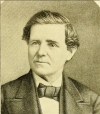
| Hinweise | [Philadelphia and popular Philadelphians (1891) 133]: Portrait von Henry Disston |
| Zeit |
Ereignis |
| 1872 |
Bau der Feilenfabrik und des Profilholzlagers |
| 1875 |
Bau der Messinggießerei und eines Holschuppens |
| 1879 |
Bau der Endverarbeitung und der Griffe-Werkstatt |
| 1879 |
Bau von Härterei und Lagerraum |
| 1882 |
Erweiterungsbauten |
| Produkt |
ab |
Bem. |
bis |
Bem. |
Kommentar |
| Holzwaren |
1872 |
[Hexamer] |
1882 |
[Hexamer] |
|
| Schnittholz |
1872 |
[Hexamer] |
1882 |
[Hexamer] |
|
| Zeit |
Objekt |
Anz. |
Betriebsteil |
Hersteller |
Kennwert |
Wert |
[...] |
Beschreibung |
Verwendung |
| 1873 |
Dampfkessel |
4 |
|
unbekannt |
|
|
|
|
|
| 1879 |
Dampfkessel |
6 |
|
unbekannt |
|
|
|
|
|
| 1883 |
Dampfkessel |
7 |
|
unbekannt |
|
|
|
|
|
| 1883 |
Dampfmaschinen |
6 |
|
unbekannt |
|
|
|
|
|
| Zeit |
gesamt |
Arbeiter |
Angest. |
Lehrl. |
männl. |
weibl. |
Kommentar |
| 1873 |
75 |
|
|
|
|
|
|
| 1875 |
75 |
|
|
|
|
|
|
| 1878 |
75 |
|
|
|
|
|
|
| 1879 |
250 |
|
|
|
|
|
3-4 Mädchen, 20 Jungen, Rest Männer) |
| 1883 |
625 |
|
|
|
|
|
15 Mädchen, 200 Jungen, Rest Männer |
| ZEIT | 1891 |
| THEMA | Beschreibung |
| TEXT | The Henry Disston & Sons, Keystone Saw, Tool, Steel and File Works which now cover an area of twenty-four acres to which new buildings are constantly being added at Tacony, Philadelphia, were started in 1840, as the Disston Keystone Saw Works, in a cellar on Bread street, near Second and Arch streets, Philadelphia. The Disston family consisting of father, son and daughter, arrived in Philadelphia from England in 1833. In three days the father was dead; when young Henry Disston, a boj of fourteen and without money, in looking around for employment apprenticed himself with a saw making firm. The employers of the young man could not pay him in money a small amount of back wages when he derided to leave them, so he was compelled to accept a lot of brick trowels which he managed to turn into cash. He realized about
350, and with this sum the Disston Keystone Saw Works on Bread street were started. Mr. Disston would tell with pride the humble manner in which he began, how he built his own furnace, trundled his first wheel-barrow of coal from Willow street wharf to the "works", made his own tools, and in fact ran the whole business without help. Having made his saws, he himself took them out on sale, but it was a long while before he could make the people believe that an American saw was any tiling but a poor imitation of the English article. He was discouraged many times, but never lost heart. He often sold a saw at an advance of one per cent, profit. He took a room in a factory at Front and Meriden streets, and though he owed nothing he was merely a subtenant and his effects were levied upou for the rent of the building. Money was advanced by an old friend who appeared at the most opportune moment, and a new landlord taking the building Mr. Disston resumed operations. He had borrowed 200. It enabled him to branch out a little and now he was more determined than ever to succeed. Just about this time the boiler in the building exploded and the structure was destroyed by fire, and young Disston was very severely injured. Within ten days he moved into a new building adjoining the old shop. In 1864 the business had grown to 35.000 a mouth. Fire again destroyed everything but in fifteen days saws were being manufactured on the old site under a roof of canvas. Substantial buildings were quickly erected until the establishment at Front and Laurel streets covered a number of acres extending in the rear to both sides of Haydock street. He decided to no longer import English steel and turned his scraps into steel in his own establishment. For this purpose rolling mills directly adjoining the works on Laurel street were built together with a melting department, and in this new adjunct all the iron and steel used in the several factories was produced. The tariff of 1861 gave the Henry Disston
saws their first great start and he created a new industry, founded au industrial university where a dozen useful trades are taught, and finally established at Tacony, on the Delaware river, and in the City of Philadelphia, the greatest saw works in the world. Mr. Disston put his own sons in the shop. Hamilton, now the active head of the firm served seven years before he was taken into the counting room. Albert H., now deceased, Horace C., William and Jacob S., the other partners, also served their time before they were admitted to partnership. Henry Disston dying in the year 1878, left his sons fully competent to carry on the enormous business, and these young men have pushed the capacity of the works far what it was in their father's time. The average number of men employed is 1900. In 1890 the ground enclosed by the factory was 38 acres, the number of buildings 19, horse power utilized 2,250, coal consumed 24.780 tons yearly; lumber consumed for saw handles 1.000.000 feet yearly; lumber used for shipping goods, 900.000 feet yearly; grindstones consumed, 900 tons yearly; steel consumed in file factory, 12 tons weekly; sheet steel produced, 4.300 tons yearly; bar steel produced, 7.000 tons yearly; hand saws manufactured, 25.000 dozen weekly; circular saws manufactured all sizes, 50.000 yearly; cross-cut, mill, mulay and drag saws, 200.000 yearly; hact and butcher saws, 6.000 dozen yearly; compass, keyhole and webb saws, 43.000 dozen yearly; brick trowels, 4.200 dozen yearly; files, 1.000 dozen daily. In the melting department there are all Siemen's gas furnaces. The ingots are pressed by hydraulic
pressure. The steel is made from English and American iron and selected steel scraps. 28 tons of steel are produced per day. In the upper mill 4 tons of hand-saw steel and 5 tons of merchant steel are made per day. In the large plate mill 5 tons of circular steel, and roll plates 84 in diameter arc made each day. In the lower mill 6 tons saw steel for cross-cuts and long saws per day. In the Rod mill used for rolling bar and band saw steel, the output is 10 tons per day. In the Train mill for rolling file steel and all small sizes and shapes of merchant bar steel, the output is 3,5 tons per day. The furnace for hardening and tampering saws has a capacity for 70 large circular-saws and 1.000 cross-cuts. A hand saw furnace for hardening has au output of 425 dozen per day. In the long saw cutting out department 1.000 saws is the daily output; hand saws and small work cutting out department output 425 dozen daily; band saw, cutting out, and finishing department, 25 saws 8 by 50 feet, and 400 band saws weekly; circular saw department output per day 25 large and 200 small size; Inserted tooth department, capacity for inserted tooth circular-saws 10 per day; smithing and finishing circular department, 20 large and 200 small per day; cross-cut and long saw department, grind, glaze and block 800 cuts per day; smith and hammer department, 275 dozen hand saws per day; finishing department, 150 dozen best saws and 285 dozen assorted saws are completed daily; grinding department. 263 dozen per day; grinding and drawing department, 260 dozen per day; glacing department, 341 dozen per day; handle department, 350 dozen hand saws, 75 dozen cut handles, and 60 dozen frames per day; file department, 1.000 dozen of every size and description daily; tooth department, daily output 100 gross saw sere dozen try screws, 20 dozen bevels, 50 dozen screw drivers, 50 dozen
plumb and level, 20 dozen gauges, 20 sets butt hinges. In the box and circular-saw case department, 750.000 feet of pine lumber consumed each year. The present officers of the firm are Hamilton Disston, President; Horace Disston, Vice-President; William Disston, Second Vice-President; Jacob Disston, Treasurer; Samuel Disston, Agent. The capital invested in the plant is 5.000.000. |
| QUELLE | [Philadelphia and popular Philadelphians (1891) 133] |
|